I make bread and butter pickles every summer when the farmer’s market piles up with cucumbers and onions; the sweet-and-tangy jars are a reliable snack and sandwich topper. My version of bread and butter pickles uses a clear 1:1 sugar-to-vinegar balance plus a short hot-simmer step that keeps slices crisp and prevents soggy jars, so you get crunchy pickles whether you can them or keep them in the fridge.
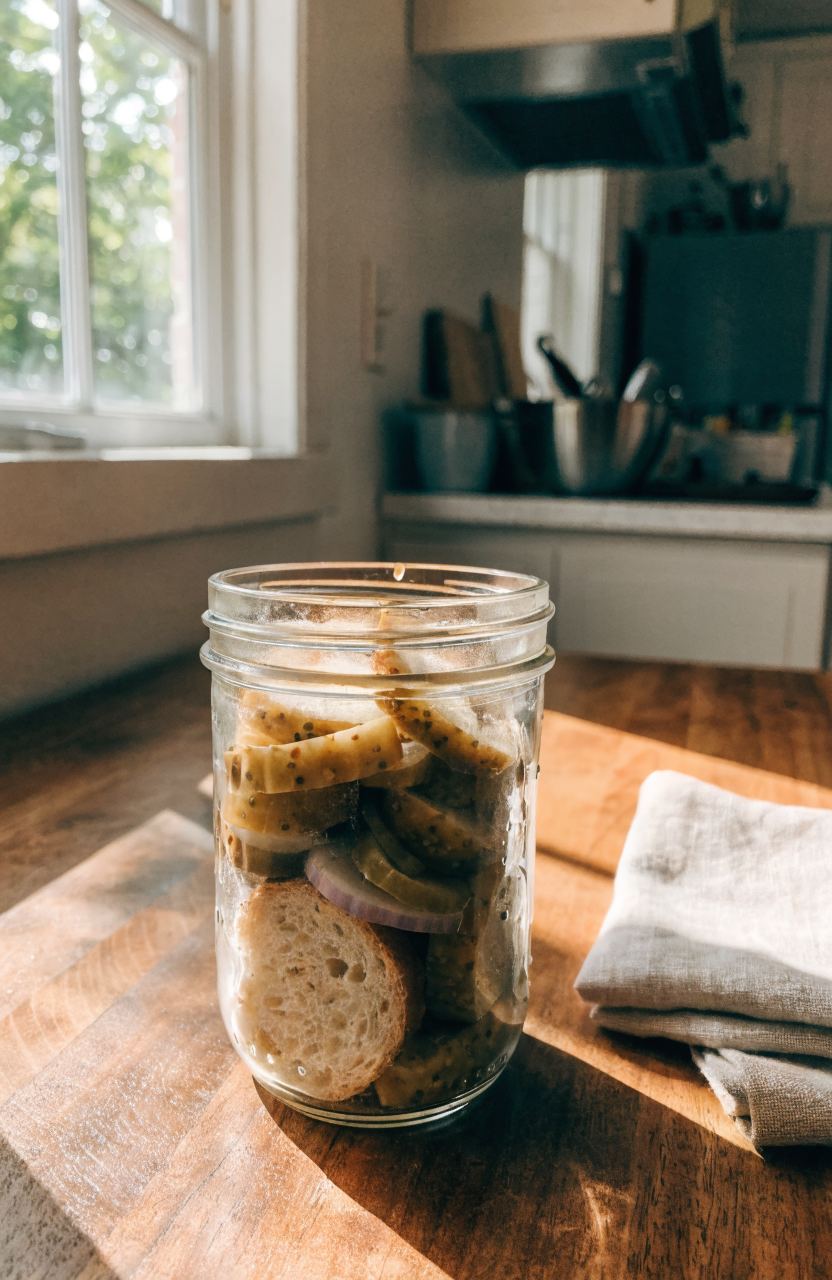
Why this bread and butter pickles recipe works
Bread and butter pickles are all about a steady sweet-acid backbone and crunchy cucumber texture. The key technique here is a quick hot brine that both dissolves the sugar and softens the cucumber surface just enough for the flavors to penetrate while preserving crunch. During testing I used different vinegar strengths and found that a 5% distilled white vinegar or a mild white vinegar works best to balance sweetness without making the pickles overpoweringly sharp. I also settled on a sugar-to-vinegar ratio of 1:1 by volume with a bit of kosher salt; that ratio gives the classic tender-crisp snap and a shelf-stable acid level for proper canning when jars are processed with a hot-water bath.
What changed during testing was how thin to slice the cucumbers and onions. Thicker slices stayed very crisp but didn’t absorb flavor evenly; very thin slices became limp. The final method slices cucumbers about 1/8–1/4 inch thick, which creates a good surface area for brine absorption without losing texture. Finally, I added a short blanch of the cucumbers in the hot brine (one minute) before packing jars for hot-fill canning; that step helps prevent floaters and yields a more even color.
Key takeaways
- Use 5% vinegar and a 1:1 sugar-to-vinegar ratio for balanced flavor and canning safety.
- Slicing cucumbers 1/8–1/4 inch thick ensures crunch plus good brine absorption.
- Choose Kirby or pickling cucumbers and keep them chilled until use to help maintain crispness.
Ingredients you’ll need and what to substitute
For classic bread and butter pickles, the primary ingredients are cucumbers, onion, vinegar, sugar, and pickling spice (or a simple homemade mix). I prefer pickling cucumbers (often sold labeled “Kirby”) because they are firmer and have fewer seeds — they stay crunchy longer. If you can’t find Kirbys, use small regular slicer cucumbers; avoid large, over-mature cucumbers that are watery and seedy. Use granulated sugar for the brine; light brown sugar shifts the flavor toward molasses and is an optional variation below.
Substitutions: If you don’t have distilled white vinegar, a mild white vinegar at 5% acidity is a good substitute and gives a slightly rounded flavor. For a lower-sweet result, reduce sugar by 20% but expect a tangier pickle and shorter shelf appeal if canning. Replace yellow onions with thinly sliced red onion for a prettier jar and a slightly sharper bite. If you prefer less spice, halve the pickling spice or omit the crushed red pepper for a kid-friendly version.
Equipment
You don’t need fancy gear — a few canning items and common kitchen tools are enough. Essential items include a large pot for the brine and hot-water bath, a small saucepan for warming vinegar if you scale down, a sharp chef’s knife or mandoline for even slices, and standard half-pint or pint mason jars with new lids. If you plan to can multiple jars, a 20-quart stockpot or water-bath canner works best; for a single batch of fridge pickles, a large bowl and a sieve are fine. I use a 12-inch rimmed baking sheet to hold jars while filling — it makes transport to the water bath easier.
How to make bread and butter pickles
Prepare the vegetables
Wash cucumbers and onions thoroughly and trim the blossom ends of the cucumbers (they contain enzymes that can soften pickles). Slice cucumbers 1/8–1/4 inch thick and slice onions thinly. Keep everything cold until you start so the vegetables stay crisp. If you’re worried about limp pickles, place sliced cucumbers in ice water for 30 minutes, then drain thoroughly before packing.
Make the brine
In a large, heavy-bottomed pot combine equal volumes of granulated sugar and vinegar (for this recipe I use 2 cups each) with 1 tablespoon kosher salt, 1 teaspoon mustard seeds, 1 tablespoon pickling spice (tied in a spice bag or loose if you strain later), and 1/2 teaspoon crushed red pepper flakes. Bring the mixture to a boil, stirring until sugar and salt dissolve. Once boiling, reduce to a simmer — this is your hot brine.
Quick blanch and pack
Working in batches, add sliced cucumbers to the simmering brine for 60 seconds; remove with a slotted spoon and let drain briefly on a clean towel. This one-minute blanch helps prevent floaters and evens color while preserving crunch. Tightly pack cucumbers and onions into sterilized jars, leaving 1/2 inch headspace. Pour the hot brine over the vegetables, ensuring spices are distributed, and maintain the 1/2 inch headspace. Remove air bubbles by sliding a non-metallic utensil around the jar, wipe rims, and apply lids and screw bands finger-tight.
Process or chill
For shelf-stable jars: place filled jars on a rack inside a large stockpot of simmering water and cover by 1–2 inches. Bring to a rolling boil and process pint jars for 10 minutes (adjust for altitude if needed). Remove jars and cool on a towel without tilting; you should hear lids pop within a few hours. For quick refrigerator pickles: skip the water bath, let jars cool to room temperature, then chill for at least 24 hours before eating; they improve after 3 days.
Things I learned the hard way
- Don’t skip trimming blossom ends — the enzyme can cause softening.
- Slice thickness matters; a mandoline set too thin produced floppy pickles, so aim for 1/8–1/4 inch.
- Using too little salt made the flavor flat; stick to the salt amount for balance and preservation.
- If jars float during processing, it usually means air pockets — the one-minute blanch and proper packing reduce floaters.
- Store cucumbers chilled and process them within a day of purchase when possible; older cucumbers often become mealy.
- For predictable pH when canning, use 5% vinegar and don’t dilute with water unless the recipe accounts for acidity.
Variations to try
- Spicy bread and butter pickles: add 1/2 to 1 teaspoon red pepper flakes per jar and a few thin slices of jalapeño; keep brine ratio the same but expect a hotter bite.
- Brown sugar version: replace half the granulated sugar with light brown sugar for a deeper, molasses-tinged flavor; color will be darker and slightly stickier.
- Herbed pickles: add a sprig of dill or 1/2 teaspoon dried dill weed per jar for a fresher herb note; no timing change needed.
- Quick refrigerator sweet pickles: halve the recipe, skip blanching, and chill for 3 days before serving for a faster, non-canned option.
Storage, freezing, and reheating
Properly processed and sealed canned jars store shelf-stable in a cool, dark pantry for up to 12 months; for best texture and flavor, use within 6 months. Once opened, refrigerate and use within 2 months for best crunch. These pickles do not freeze well — freezing destroys the crisp texture, so do not freeze. For fridge jars (unprocessed), keep refrigerated and consume within 6–8 weeks. If jars lose their vacuum (bulging lids or leakage), discard the contents.
What to serve with bread and butter pickles
- Classic deli-style sandwiches and burgers — the sweet tang cuts through rich meats and cheeses.
- Coleslaw or potato salad as a bright contrast for summer cookouts.
- Cheese boards — pair with sharp cheddar or smoked gouda.
- Fish tacos — a spoonful of chopped pickles adds crunch and lift.
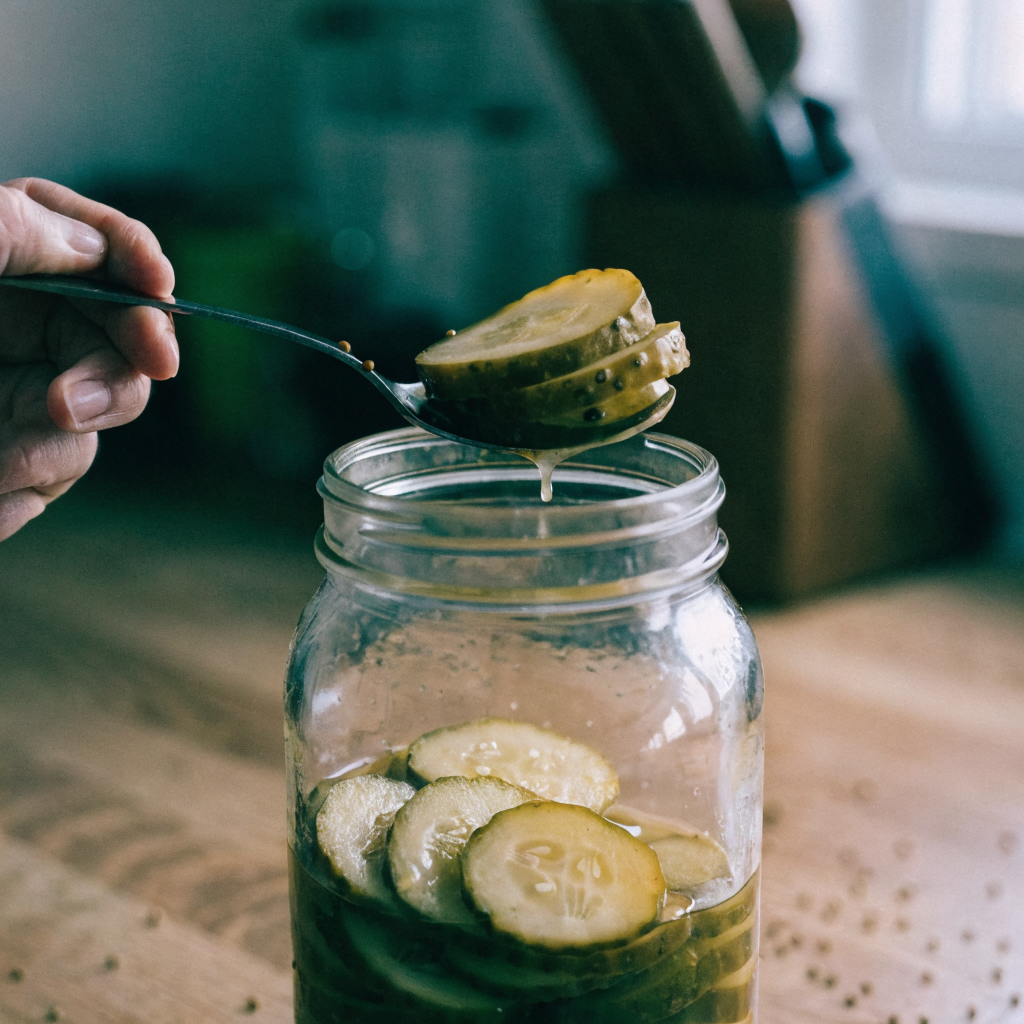
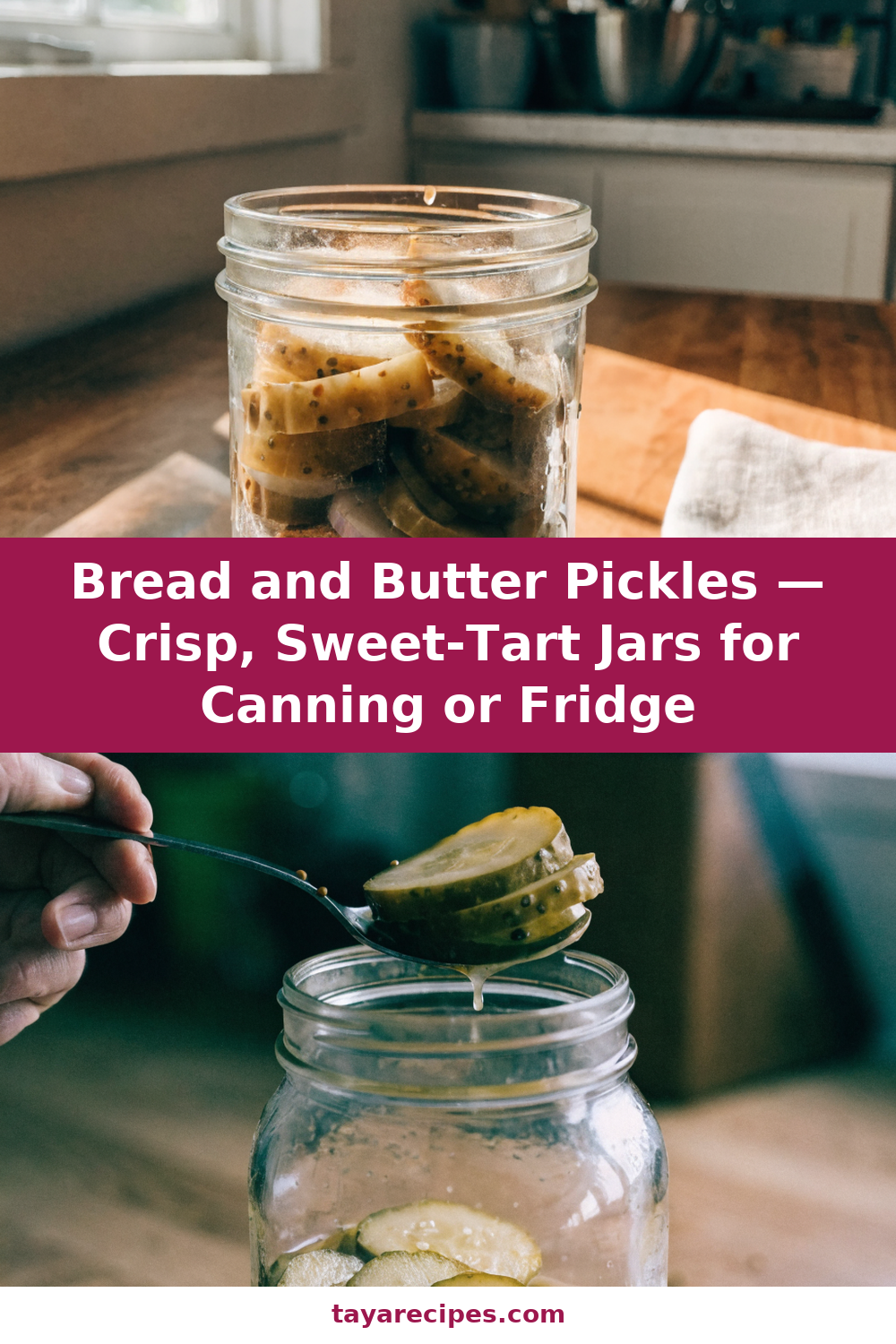
Classic Bread and Butter Pickles (Canning or Quick Fridge Method)
Ingredients
Equipment
Method
- Wash cucumbers and onions and trim cucumber blossom ends. Slice cucumbers 1/8–1/4 inch thick and slice onions thinly. Keep vegetables chilled until ready to use.
- In a large pot combine sugar, vinegar, kosher salt, mustard seeds, pickling spice, crushed red pepper (if using), and 1/2 cup water. Bring to a boil, stirring until sugar and salt dissolve, then reduce to a simmer.
- Working in batches, add cucumber slices to simmering brine for 60 seconds, then remove with a slotted spoon and drain briefly. Tightly pack cucumbers and onions into sterilized jars, leaving 1/2 inch headspace.
- Pour the hot brine over packed jars, maintaining 1/2 inch headspace. Remove air bubbles, wipe rims clean, apply lids and screw bands finger-tight.
- For shelf-stable jars: place jars in a water-bath canner, cover with water by 1–2 inches, bring to a rolling boil, and process half-pint jars for 10 minutes. Remove and cool undisturbed. For refrigerator pickles: let jars cool to room temperature, then refrigerate; wait at least 3 days before eating.
- After jars cool, check lids for seals (center should be concave). Label with date. Store canned jars in a cool dark place up to 12 months and opened or fridge jars for 6–8 weeks.
Notes
Frequently asked questions
Can I use regular vinegar instead of distilled white? Yes. A mild white vinegar at 5% acidity works well and adds a neutral flavor, but avoid vinegars under 5% acidity because they may not provide safe acidity for canning. If unsure, stick to distilled white for consistent results.
Do I have to process jars in a water bath? If you want shelf-stable jars that sit on your pantry shelf, yes — process them in a water-bath canner. If you plan to keep jars in the fridge and eat them within a few weeks, you can skip the water bath and simply chill the jars.
Why are my pickles soft? Soft pickles usually come from overripe cucumbers, not trimming the blossom end, too-thin slicing, or a diluted/weak brine. Use firm cucumbers, trim blossom ends, keep slices moderately thick, and follow the brine ratio and salt amounts in the recipe.
Can I can this recipe at high altitude? Yes, but increase processing time according to your altitude. For most higher-altitude adjustments, add 1–5 minutes; consult your local extension guidelines for exact times to ensure safe processing.
How long before they taste good? For the best flavor, wait at least 3 days for fridge pickles and 2 weeks for canned pickles; they continue to mellow for several weeks. Flavor improves as the brine moves into the cucumber slices.
Can I reuse pickling spice? It’s better to add fresh spice each batch. Whole spices lose potency over time, and reused spices may introduce off flavors or less reliable results.
Closing
Bread and butter pickles are one of those pantry staples that brighten sandwiches and snack plates; following the 1:1 brine ratio, trimming blossom ends, and blanching briefly gave reliably crisp jars. Store sealed jars in a cool, dark place and refrigerate after opening; the flavor and texture continue to improve over the first few weeks, making these pickles a versatile addition to summer meals and preserved pantry shelves.

Leave a Reply