The first time I tried to make zucchini bread I ended up with a dense, oily loaf that tasted only faintly of zucchini. After testing several batches, I landed on a straightforward approach that uses measured, drained shredded zucchini and a two-stage mixing method to deliver a moist, tender crumb that isn’t soggy—this loaf hits the balance every time.
This recipe is written for home cooks who want clear timing, realistic substitutions, and the sensory cues to know when the loaf is done. If you want a quick bread that slices cleanly, has a pleasant texture, and still tastes like a sweet quick bread (not plain squash), keep reading.
Why this zucchini bread works
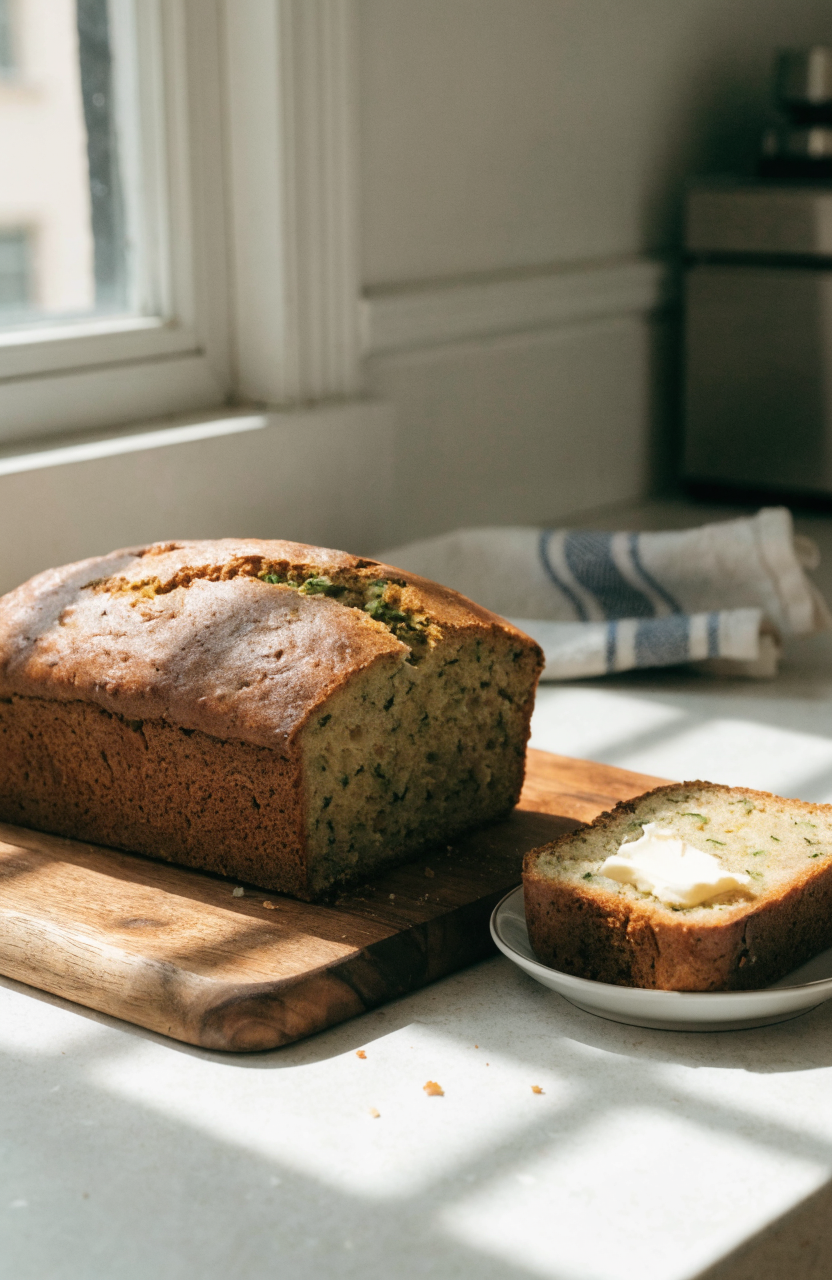
The key technique is controlling the zucchini moisture and the mixing sequence. I use a 2:3 zucchini-to-flour weight ratio (about 2 cups shredded zucchini to 2 cups flour) which keeps the crumb tender without adding excess wetness. After shredding, the zucchini is briefly salted and squeezed in a clean towel to remove free water—this prevents a gummy center. I also separate the dry and wet mixing: creaming the butter and sugar first to trap air, then folding in the dry ingredients only until combined. That reduces gluten development and keeps the texture tender. Finally, a medium oven temperature (350°F) gives even rise without over-browning the top.
During testing I tried adding the shredded zucchini straight from the box grater into the batter and found the loaf collapsed slightly in the center. Draining and gently pressing the zucchini fixed that. I also originally used all vegetable oil which made the loaf heavy; switching to a mix of butter and oil balanced flavor and moistness without making the crumb greasy.
Key takeaways
- Drain shredded zucchini well to avoid a soggy center.
- Creaming butter and sugar first gives a lighter crumb than all-oil mixes.
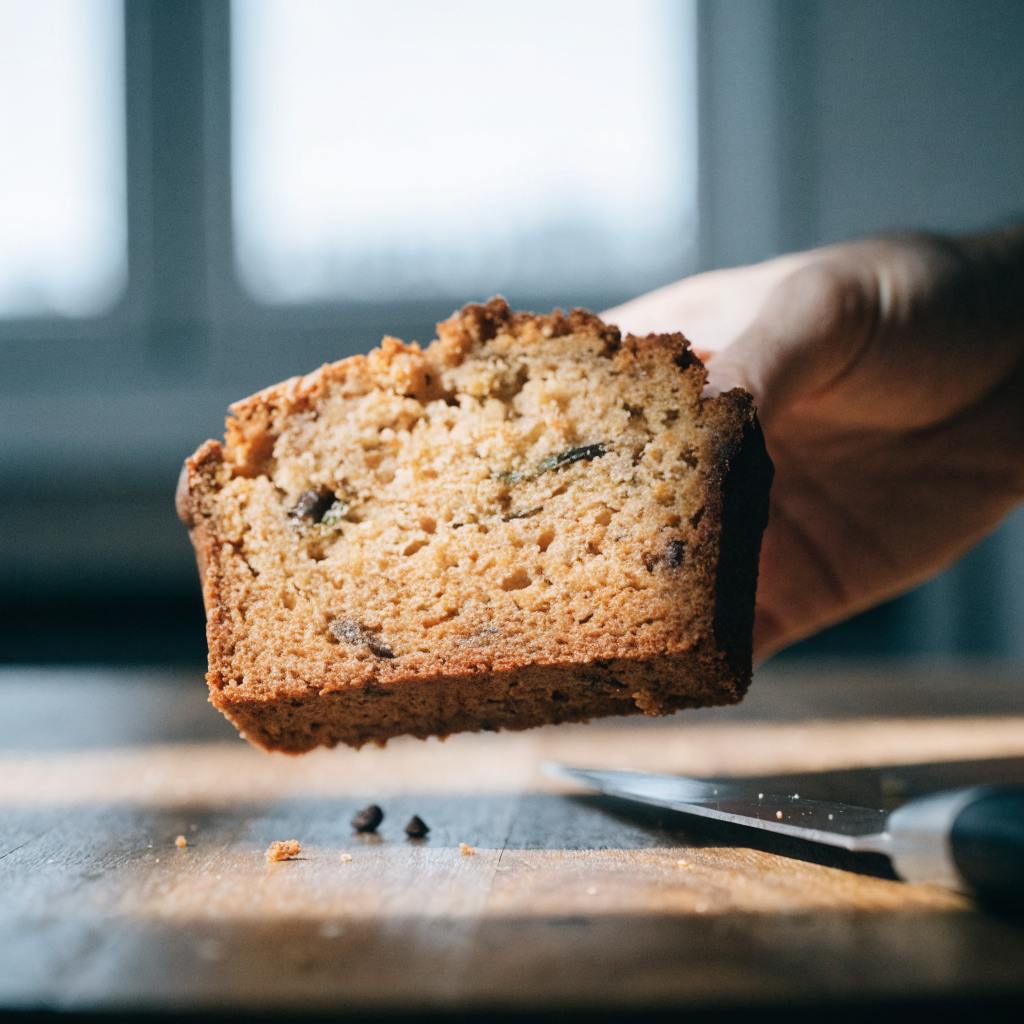
- Use the visual cues—edges pulling away and a toothpick with moist crumbs—for doneness.
- Add-ins like chocolate chips or nuts are optional and require no time change.
Ingredients you’ll need and what to substitute
This recipe keeps the ingredient list simple and pantry-friendly: all-purpose flour, granulated and brown sugars, eggs, a combination of butter and neutral oil, shredded zucchini, baking powder, baking soda, salt, ground cinnamon, and vanilla. The butter adds flavor and structure while a small amount of oil helps keep the crumb moist without turning greasy.
Substitutions that work:
- Flour: For a slightly denser loaf, you can replace up to 1 cup of all-purpose flour with whole-wheat pastry flour; expect a nuttier flavor and slightly darker color.
- Sugars: Use 1 1/4 cups granulated sugar instead of the brown-granulated mix for a lighter color and crisper top. Brown sugar adds a mild caramel note and keeps the loaf a touch moister.
- Butter/Oil: If you prefer not to use butter, swap the butter and oil for 3/4 cup vegetable oil total; the texture will be moist but the flavor less rich.
- Add-ins: 3/4 cup chocolate chips, chopped walnuts, or chopped pecans can be folded in at the end—no timing changes needed.
Important ingredient notes: shred the zucchini on the large holes of a box grater, measure it packed into the cup, then drain. Use room-temperature eggs and butter for easier creaming and better texture.
Equipment
You need a standard 9×5-inch loaf pan (metal gives a slightly crisper crust; glass will brown slower), a box grater, a large mixing bowl, a medium bowl to mix dry ingredients, a wooden spoon or rubber spatula, and a kitchen towel or cheesecloth for squeezing the zucchini. A hand mixer or stand mixer speeds the creaming step but isn’t required.
How to make zucchini bread
Prepare the zucchini
Wash two medium zucchini and trim the ends. Shred them on the large holes of a box grater; you want about 2 cups packed shredded zucchini. Place the shredded zucchini in a colander, toss with a pinch of salt, let it sit for 10 minutes, then wrap in a clean kitchen towel and squeeze until no more free water comes out. This step removes excess moisture that can make the loaf soggy.
Make the batter
Preheat the oven to 350°F and grease a 9×5-inch loaf pan; line with parchment for easy removal if you like. In a medium bowl whisk together 2 cups all-purpose flour, 1 teaspoon baking powder, 1 teaspoon baking soda, 1 1/2 teaspoons ground cinnamon, and 1/2 teaspoon salt.
In a large bowl or the bowl of a stand mixer, beat 1/3 cup (5 tablespoons) unsalted butter (room temperature) and 1/2 cup neutral oil with 3/4 cup packed light brown sugar and 1/2 cup granulated sugar until light and fluffy, about 2–3 minutes. Beat in 2 large eggs, one at a time, then stir in 1 teaspoon vanilla extract. Fold in the drained shredded zucchini.
Gently fold the dry ingredients into the wet mixture with a spatula until just combined—do not overmix. If using add-ins (3/4 cup chocolate chips or chopped nuts), fold them in now.
Bake and cool
Pour the batter into the prepared loaf pan, smooth the top, and bake at 350°F for 55–65 minutes. Start checking at 50 minutes: the loaf is done when a toothpick inserted near the center comes out with a few moist crumbs (not wet batter), the top is golden, and the edges have pulled slightly away from the pan. If the outside browns too fast but the center is underdone, tent loosely with foil for the last 10–15 minutes.
Allow the loaf to cool in the pan for 15 minutes, then transfer to a wire rack to cool completely before slicing. Cooling finishes the set of the crumb—slicing too early can cause tearing and a gummy texture.
Things I learned the hard way
- If you skip squeezing the zucchini, the center can stay wet and collapse—draining is non-negotiable.
- Using only oil makes a very moist loaf but with a flatter top and less flavor; the butter-oil combo keeps better structure and taste.
- Overmixing after adding flour makes the crumb tough—stop when streaks of flour are gone.
- Not preheating the oven can cause uneven rise and a dense center—always preheat fully to 350°F.
- First attempt mistake: I used very large zucchini and measured by cup without squeezing; the loaf was soggy. Fix: measure after shredding and squeezing, and aim for about 2 cups packed.
- To prevent a domed crack that breaks unevenly, use a light hand smoothing the top and bake at the recommended 350°F instead of higher temperatures.
Variations to try
- Chocolate Chip Zucchini Bread: Fold in 3/4 cup semi-sweet chocolate chips; no time change needed. The chips add sweetness and texture but can make the center a touch gooey when warm.
- Lemon-Zucchini Bread: Reduce cinnamon, add 1 tablespoon lemon zest and 2 tablespoons fresh lemon juice to the wet mix; bake as directed for a bright flavor shift.
- Nutty Oat Zucchini Bread: Replace 1/2 cup flour with 1/2 cup rolled oats and fold in 1/2 cup chopped walnuts; the oats absorb moisture so the crumb will be slightly firmer.
- Spiced Zucchini Bread: Increase cinnamon to 2 teaspoons and add 1/4 teaspoon ground nutmeg; keep bake time the same.
Storage, freezing, and reheating
Store cooled zucchini bread tightly wrapped at room temperature for up to 3 days, or in the refrigerator for up to 7 days. For longer storage, slice the cooled loaf and wrap slices individually in plastic wrap, then place in a freezer bag for up to 3 months. Thaw slices at room temperature or warm gently in a 300°F oven for 8–10 minutes. Expect the texture to firm slightly after refrigeration; a short warm-up restores softness.
What to serve with zucchini bread
This loaf is great for breakfast or snacks. Try it with a smear of cream cheese or Greek yogurt, alongside a cup of coffee or tea. For brunch pairings, serve with scrambled eggs, a fruit salad, or a light green salad. It also works well sliced and toasted for a grab-and-go morning.
Best Zucchini Bread (Moist, Non-Soggy Loaf)
Ingredients
Equipment
Method
- Wash and trim zucchini, shred on the large holes of a box grater to yield about 2 cups packed, toss with a pinch of salt, rest 10 minutes, then wrap in a clean towel and squeeze until no free water remains.
- In a medium bowl whisk together 2 cups flour, 1 teaspoon baking powder, 1 teaspoon baking soda, 1 1/2 teaspoons cinnamon, and 1/2 teaspoon salt; set aside.
- Preheat oven to 350°F and grease a 9×5-inch loaf pan or line with parchment. In a large bowl beat 1/3 cup butter with 1/2 cup oil, 3/4 cup brown sugar, and 1/2 cup granulated sugar until light, about 2–3 minutes; beat in 2 eggs one at a time, then stir in 1 teaspoon vanilla.
- Fold the drained shredded zucchini into the wet mixture, then gently fold in the dry ingredients until just combined; if using, fold in 3/4 cup chocolate chips or nuts. Pour batter into the prepared pan and smooth the top. Bake at 350°F for 55–65 minutes, or until a toothpick inserted near the center comes out with moist crumbs and the edges pull away slightly. Tent with foil if the top browns too quickly.
- Let the loaf cool in the pan 15 minutes, then transfer to a wire rack to cool completely before slicing to finish setting the crumb.
Notes
Frequently asked questions
Can I use frozen shredded zucchini? Yes, thaw frozen shredded zucchini completely and squeeze out excess moisture just like fresh; measure after draining because frozen zucchini can release a lot of water.
Why is my zucchini bread dense or gummy? Usually too much moisture or overmixing. Make sure you drain the zucchini, measure it packed, and fold the flour in only until combined.
Can I make this recipe into muffins? Yes. Spoon batter into a prepared muffin tin and bake at 350°F for 18–22 minutes, until a toothpick comes out with moist crumbs.
Do I need to peel the zucchini? No, the skin is fine and adds color and nutrients; simply wash and shred with the skin on.
How do I know when zucchini bread is done? Look for a golden top, edges pulling slightly from the pan, and a toothpick inserted near the center coming out with moist crumbs but no wet batter.
Can I double the recipe? Yes, double and bake in two loaf pans or bake in a 9×13-inch pan for about 40–50 minutes; check doneness at the earlier time and use a toothpick as your cue.
Closing
This zucchini bread balances moistness and structure thanks to careful draining, a butter-and-oil mix, and a gentle mixing method—a loaf you can slice, serve, and enjoy without testing patience. Slice thin and toast a slice the next morning; it still tastes fresh and tender and makes a simple, satisfying breakfast or snack.

Leave a Reply