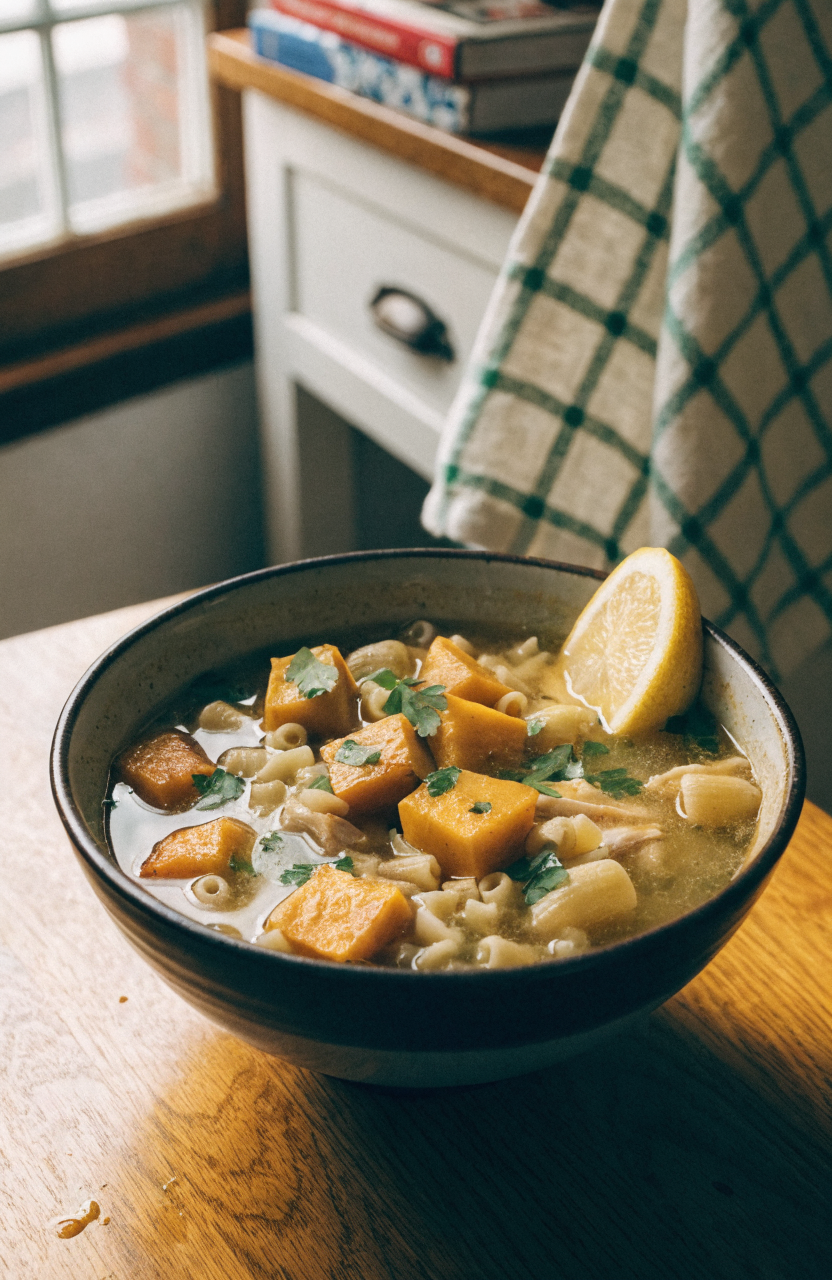
On a cool afternoon I wanted a soup that felt like a fall hug without a long fuss, so I developed an Italian chicken soup that balances roasted autumn vegetables, braised chicken, and a bright herb-forward broth. The focus keyword guides the flavors: oregano, rosemary, garlic, and a splash of lemon at the end to lift the richness.
Why this Italian chicken soup works
The key technique is simple: roast the root vegetables first and then finish everything in a gently simmering broth so the vegetables keep texture and the chicken stays tender. Roasting caramelizes the squash, carrots, and onion and concentrates their flavor, which prevents the soup from tasting diluted. For the chicken, I use boneless, skin-on thighs for flavor and then remove the skin before shredding, which gives me juicy meat without excess fat in the broth. I tested versions where everything went straight into the pot and those ended up dull and watery; the roast-then-simmer sequence produced a clearer, more flavorful broth and vegetables that retained pleasant bite.
My ratio is roughly 6 cups of broth to 1.5 pounds of chicken and 6 cups of vegetables, which yields a hearty but balanced bowl that serves six. I also add a modest amount of short pasta to give body without turning the soup into a stew; you can omit the pasta if you prefer a lighter bowl. The timing is important: a brief 20-minute simmer after adding shredded chicken and pasta is enough to meld flavors without overcooking.
Key takeaways
- Roast root vegetables first for concentrated flavor and firmer texture.
- Use thighs or a mix of thighs and breasts and remove skin before shredding to control fat.
- Add pasta late and simmer just until al dente to prevent mushiness.
- Finish with lemon and fresh herbs to brighten the broth.
Ingredients you’ll need and what to substitute
For a dependable Italian chicken soup, key ingredients include chicken thighs (for consistent tenderness), an autumn mix of butternut squash and carrots, canned tomatoes for depth, and chicken broth for the liquid base. Olive oil and a bit of tomato paste give backbone while garlic, dried oregano, and fresh rosemary supply Italian character.
Substitutions that work: swap boneless chicken breasts for thighs if you prefer white meat—reduce the simmer time by 5 to 8 minutes and check for 165°F internal temperature. Use sweet potatoes or a mix of parsnips and rutabaga if you can’t find butternut squash; they will alter sweetness and texture slightly, so roast until just tender. If you want a gluten-free option, omit the short pasta or use a gluten-free small pasta; cook times may vary. Low-sodium broth allows better control over final seasoning, and you can always add salt at the end. If you want more heft, add a drained can of cannellini beans late in the simmer.
Equipment
You’ll need one sheet pan for roasting, a 6-quart Dutch oven or large soup pot for simmering, a chef’s knife and a cutting board, and a ladle. A fine-mesh skimmer or slotted spoon is handy for removing any foam while simmering. If you don’t have a sheet pan, a rimmed baking dish works for roasting. A thermometer helps confirm chicken doneness but is optional if you rely on the visual cues described below.
How to make Italian chicken soup
Roast the vegetables
Preheat the oven to 425°F. Toss diced butternut squash, sliced carrots, and roughly chopped onion with 2 tablespoons olive oil, 1/2 teaspoon salt, 1/2 teaspoon black pepper, and a pinch of dried rosemary. Spread in a single layer on a rimmed sheet pan and roast 20 to 25 minutes, stirring halfway, until edges are browned and vegetables are fork-tender but not falling apart. This caramelization is what gives the broth a deeper, less watery flavor.
Sear and braise the chicken
While the vegetables roast, heat 1 tablespoon olive oil in a 6-quart Dutch oven over medium-high heat. Pat 1.5 pounds boneless, skin-on chicken thighs dry and season with 1/2 teaspoon salt and 1/4 teaspoon pepper. Place thighs skin-side down and sear 4 to 5 minutes until the skin is golden; flip and brown the other side 2 minutes. Remove thighs to a plate. Pour off and discard excess surface oil, leaving about 1 tablespoon in the pot.
Build the broth
Reduce heat to medium, add 1 medium diced carrot and 2 minced garlic cloves to the pot and sauté 1 to 2 minutes until aromatic. Stir in 1 tablespoon tomato paste and cook 30 seconds. Add one 14.5-ounce can diced tomatoes with their juices, 6 cups low-sodium chicken broth, 1 teaspoon dried oregano, 1 bay leaf, and the roasted vegetables. Nestle the seared chicken thighs back into the pot. Bring to a simmer, then cover and gently simmer 18 to 22 minutes, or until the chicken reaches 165°F on an instant-read thermometer.
Finish and assemble
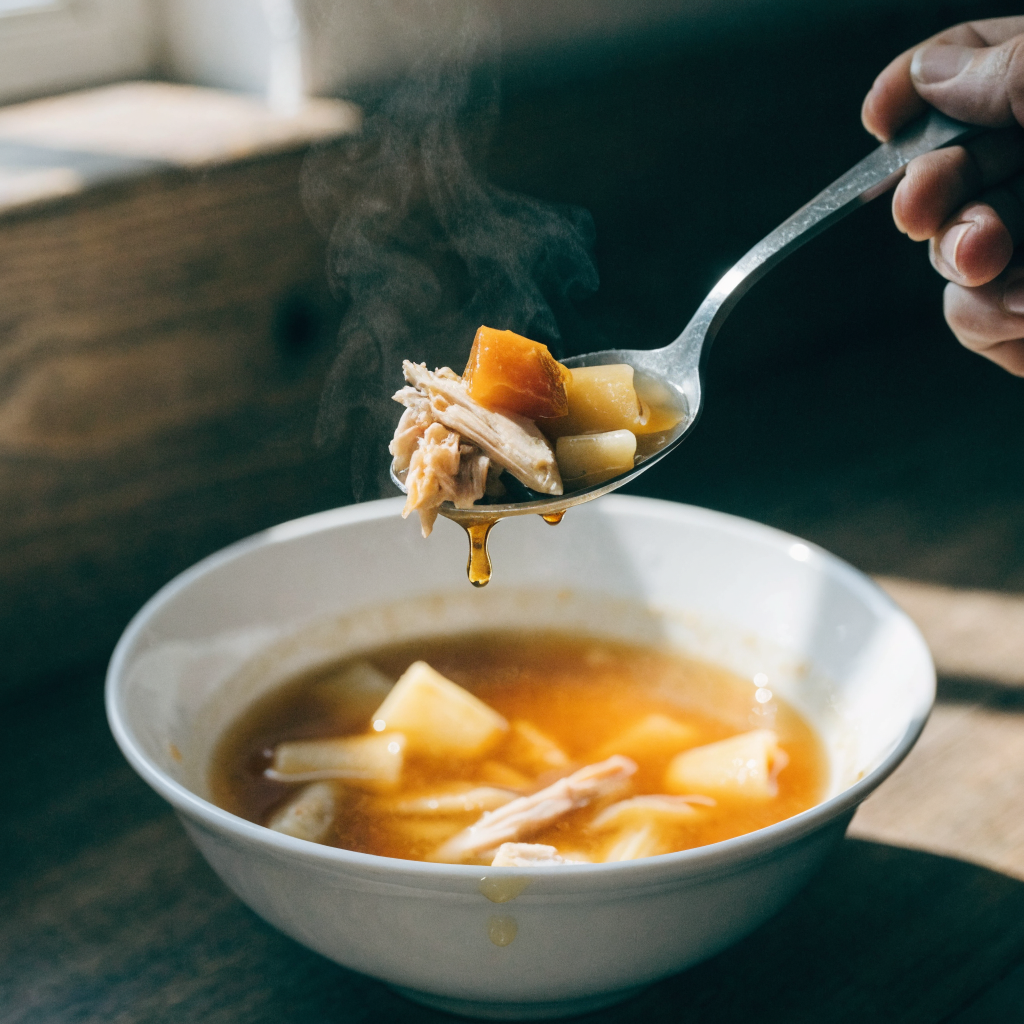
Remove the chicken and shred with two forks, discarding skin and any excess fat. Add 1 cup small pasta (such as ditalini or small shells) to the simmering pot and cook until al dente, about 6 to 8 minutes. Return shredded chicken to the soup for the final 2 minutes to heat through. Stir in 2 tablespoons chopped fresh parsley, 1 tablespoon lemon juice, and adjust salt and pepper to taste. Remove and discard the bay leaf before serving.
Sensory cues: the broth should smell bright with tomato and herbs; roasted vegetables contribute a roasted aroma, not a boiled one. Vegetables will have a slight bite; pasta should be tender but not mushy. If the broth tastes flat, a final pinch of salt and a splash more lemon will wake it up.
Things I learned the hard way
- Don’t skip roasting the vegetables: when I tested a straight-simmer version the soup tasted thin; roasting fixed that immediately.
- Avoid overcooking the pasta: add it late and test early to stop at al dente—leftover soup can absorb liquid and soften pasta further.
- Skin-on thighs give better flavor, but remove skin after shredding if you prefer less fat in the bowl.
- Too-high simmering makes the chicken stringy; keep the pot at a gentle simmer to keep meat tender.
- If your broth becomes cloudy or greasy, skim the surface with a spoon or a paper towel held lightly to the top to lift fat.
- First attempt mistake: I added lemon at the start and lost brightness; now I always finish with lemon to preserve that fresh lift.
Variations to try
- White-Bean Italian Chicken Soup: Stir in one drained 15-ounce can cannellini beans with the pasta and reduce the pasta to 1/2 cup; no other timing changes needed.
- Greens and Orzo: Replace short pasta with 3/4 cup orzo and add 3 cups chopped kale or spinach in the last 2 minutes; wilt until just tender.
- Spicy Tomato Kick: Add 1/4 to 1/2 teaspoon crushed red pepper with the garlic to bring gentle heat; no other changes.
- Comforting Rice Version: Swap pasta for 3/4 cup parboiled rice but add it earlier and simmer 12 to 15 minutes until rice is tender; expect a thicker body.
Storage, freezing, and reheating
Refrigerate leftovers in airtight containers for up to 4 days. If you included pasta, it will soak up broth and soften; to restore after refrigeration, reheat gently on the stove with 1/2 cup additional broth per quart of soup and simmer 5 to 8 minutes to loosen textures. This soup freezes well without the pasta: cool completely, transfer to freezer-safe containers leaving 1/2-inch headspace, and freeze up to 3 months. Thaw overnight in the refrigerator and reheat on the stove; if you froze with pasta, expect a softer texture after reheating.
What to serve with Italian chicken soup
Pair with a simple green salad with lemon vinaigrette to echo the soup’s brightness, a crusty baguette for dipping, or garlicky roasted broccoli for extra veggies. A small platter of shaved Parmesan and extra lemon wedges works well for guests to finish their bowls.
Italian Chicken and Autumn Veggie Soup
Ingredients
Equipment
Method
- Preheat oven to 425°F and toss butternut squash, carrots, and onion with 1 tablespoon olive oil, 1/2 teaspoon salt, and 1/4 teaspoon black pepper; spread on a rimmed sheet pan and roast 20 to 25 minutes, stirring once, until edges brown and vegetables are fork-tender.
- Heat 1 tablespoon olive oil in a 6-quart Dutch oven over medium-high heat; season chicken thighs with 1/2 teaspoon salt and 1/4 teaspoon pepper and sear skin-side down 4 to 5 minutes until golden, flip and brown 2 more minutes, then remove to a plate.
- Reduce heat to medium, sauté 2 minced garlic cloves and 1 diced carrot in the pot 1 to 2 minutes, stir in 1 tablespoon tomato paste and cook 30 seconds, then add diced tomatoes, 6 cups chicken broth, 1 teaspoon dried oregano, 1 bay leaf, and the roasted vegetables; nestle seared chicken into the pot and bring to a gentle simmer.
- Cover and simmer 18 to 22 minutes until chicken registers 165°F and is tender.
- Remove chicken, discard skin and shred meat with two forks. Add 1 cup small pasta to the simmering broth and cook 6 to 8 minutes until al dente. Return shredded chicken to the pot for the final 2 minutes to warm through. Stir in 2 tablespoons chopped parsley and 1 tablespoon lemon juice, adjust seasoning, and discard the bay leaf before serving.
Notes
Frequently asked questions
Can I use chicken breasts instead of thighs? Yes — you can use boneless chicken breasts; reduce the simmer time by 5 to 8 minutes and remove at 165°F to prevent dryness. Shred or dice and return to the pot.
Can I make this soup ahead? Yes — you can roast the vegetables and cook the chicken a day ahead and refrigerate separately; combine with broth and finish with pasta and lemon just before serving to preserve texture.
Is this soup freezer-friendly? Yes, but omit or undercook the pasta if you plan to freeze; frozen pasta becomes very soft. Freeze up to 3 months and thaw in the refrigerator before reheating gently.
Why is my soup watery? Watery soup often comes from skipping the roast step or adding too much broth for the vegetables used. Roasting concentrates vegetable flavor. Also avoid overboiling which dilutes and flattens the broth.
How can I make this soup vegetarian? Substitute vegetable broth, skip the chicken, and add drained white beans or extra roasted squash for protein and body; increase the roasting time slightly if needed for more caramelization.
Closing
This Italian chicken soup balances roasted autumn vegetables and tender chicken for a bowl that smells like fall and tastes bright from the finishing lemon; I hope it becomes a straightforward, reliable recipe you reach for on cool evenings. Serve with warm bread and an extra lemon wedge so diners can add brightness to taste.


Leave a Reply