The first time I tried a slow-cooker take on chicken pot pie I ended up with a thin, watery sauce and mushy noodles — so I rebuilt the method. This Crock Pot Chicken Pot Pie Pasta gets the slow cooker’s hands-off braising benefit for juicy chicken and vegetables, then locks in texture by reducing and finishing the sauce on the stovetop before adding pasta. It’s the kind of weeknight recipe that smells like comfort, serves easily, and gives you a consistent creamy result every time.
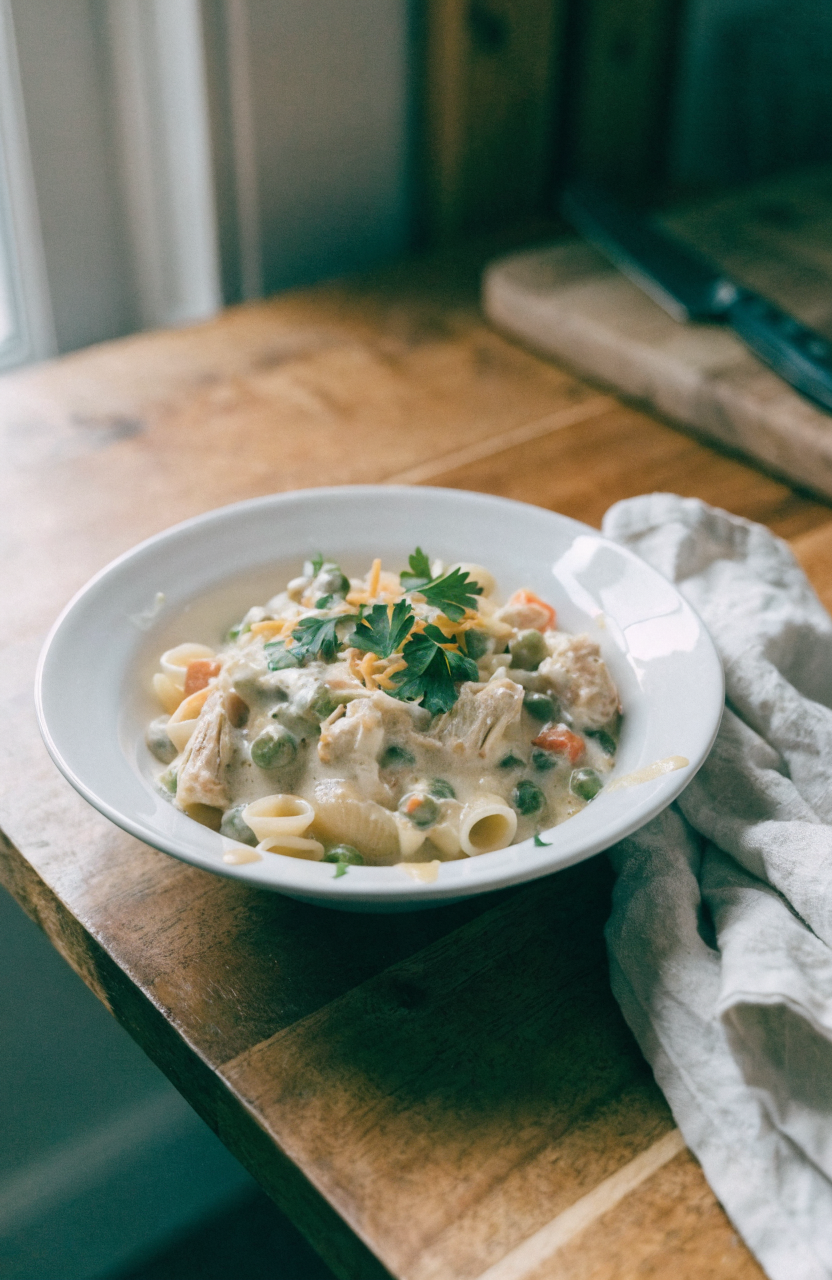
Why this chicken pot pie pasta works
The key technique is separating slow braising from the pasta-cooking step. In many one-pot slow-cooker recipes pasta goes in too early, absorbing excess liquid and becoming gluey; or the sauce never concentrates and the finished dish feels watery. I braise chicken and vegetables in the Crock Pot to develop flavor and tenderize the meat, then pull the chicken and reduce the sauce on the stovetop to the right thickness before adding pasta. That controlled reduction fixes watery sauce, and stirring the noodles in at the end prevents overcooking and gives you a creamy, velvety coating rather than a stodgy result.
During testing I adjusted the liquid ratio and the timing: my first attempt used full cup-for-cup broth and flour, and the sauce separated when I tried to thicken it in the slow cooker. What made the final version more reliable was finishing the sauce on medium heat, using a small slurry of flour and cold water to jump-start thickening, and simmering just until it clings to a spoon. I also replaced frozen mixed vegetables with a mix of fresh and thawed frozen veg for better texture.
Key takeaways
- Slow-braise the chicken and veggies for deep flavor, then reduce the sauce on the stovetop to avoid a watery finish.
- Add pasta at the end and gently fold—no boiling pasta in the slow cooker—to prevent mushy noodles.
- Use a small flour slurry and simmer a few minutes to reach a clingy, creamy sauce that won’t separate when chilled.
Ingredients you’ll need and what to substitute
This recipe builds on simple pantry staples plus a few fresh items. Boneless skinless chicken thighs are my first choice because they stay juicy after long braising; breasts will work but dry out more easily, so reduce slow-cook time by 20–30 minutes and watch internal temperature. Whole milk gives a creamy mouthfeel without being overly rich; for a slightly lighter result use 2% milk plus 2 tablespoons of cream cheese whisked in at the end. I use all-purpose flour to thicken—cornstarch works but needs a cold slurry and a shorter simmer to avoid a starchy taste.
Realistic substitutions: swap chicken thighs for 1¾ pounds boneless skinless chicken breasts and check doneness at 165°F; replace fresh thyme with 1 teaspoon dried thyme (use less because dried is concentrated); replace peas and carrots with 2 cups frozen mixed vegetables (thawed) if you want a shortcut. For a dairy-free version, use an equal amount of unsweetened oat milk and replace the butter with 2 tablespoons olive oil, though the sauce will be slightly thinner.
Equipment
You’ll need a standard 6-quart slow cooker for even braising and enough room for the pasta stage. A 12-inch skillet or large Dutch oven is useful for reducing the sauce and finishing the pasta; a rimmed baking sheet or jumbo bowl helps when shredding the chicken. A fine-mesh strainer is handy if you prefer a smoother sauce, but it isn’t required.
How to make chicken pot pie pasta
Step 1: Slow-braise the chicken and vegetables
Start by sautéing aromatics briefly in a skillet (optional but recommended) to develop flavor: melt butter in a 12-inch skillet over medium heat and cook 1 medium diced onion and 2 minced garlic cloves until softened and fragrant, about 4 minutes. Transfer the aromatics to the slow cooker along with 1½ pounds boneless skinless chicken thighs, 2 cups diced carrots, 1½ cups diced celery, 1 cup frozen peas (if using), 1½ cups low-sodium chicken broth, 1 cup whole milk, 1 teaspoon salt, ½ teaspoon black pepper, 1 teaspoon dried thyme, and 2 bay leaves. Cover and cook on LOW for 3½ to 4 hours or on HIGH for 2 to 2½ hours, until the chicken reads 165°F and the vegetables are tender but not mushy.
Step 2: Remove, shred, and reduce
When the chicken is done, transfer the meat to a large bowl and shred with two forks. Remove and discard bay leaves. Pour the remaining liquid into a 12-inch skillet or Dutch oven set over medium-high heat. Bring to a simmer and let it reduce for 8–12 minutes; you want it to evaporate some water so the sauce thickens. Make a slurry by whisking 2 tablespoons all-purpose flour with 3 tablespoons cold water until smooth, then whisk the slurry into the simmering sauce. Simmer 2–3 minutes more, stirring, until the sauce thickly coats the back of a spoon. If the sauce becomes too thick, whisk in up to ½ cup broth or milk to loosen it.
Step 3: Finish with pasta and cheese
Lower the heat to medium-low and stir the shredded chicken back into the reduced sauce along with 8 ounces dry short pasta (like rotini, penne, or shells). Cover and simmer gently, stirring often, until the pasta is just al dente — about 8–10 minutes depending on the shape. If the sauce absorbs too much liquid before the pasta is done, add 2–4 tablespoons warm broth as needed. Stir in 1 cup shredded sharp cheddar cheese and 2 tablespoons chopped fresh parsley off the heat; the cheese will melt into a creamy coating. Taste and season with additional salt and pepper if needed. Serve immediately.
Things I learned the hard way
- Don’t add dry pasta to the slow cooker during braising— it soaks up too much liquid and becomes gluey.
- If the sauce is watery after braising, don’t dump in flour directly; reduce first and then use a small slurry to avoid lumps and separation.
- Chicken thighs give a juicier result than breasts—my first trial with breasts came out dry until I shortened the slow-cook time.
- Frozen vegetables added at the start can release excess water; I now use fresh carrots and celery and add peas near the end or use thawed frozen peas.
- Use medium heat when simmering on the stovetop; high heat risks the milk splitting or scorching on the pan bottom.
Variations to try
Chicken and mushroom: Add 8 ounces sliced cremini mushrooms sautéed with the onions; reduce the liquid by ¼ cup and finish with ½ cup white cheddar for a deeper flavor. Turkey pot pie pasta: Substitute shredded roasted turkey for the chicken and reduce the slow-cook time slightly since turkey fragments can dry. Herb-forward: Increase fresh thyme and add 1 tablespoon chopped fresh sage near the end for an autumnal note; expect a slightly earthier flavor and no timing changes.
Storage, freezing, and reheating
Refrigerate leftovers in an airtight container within two hours of cooking and use within 3–4 days. To reheat, add the portion to a skillet with 2 tablespoons water or broth and warm over medium-low, stirring until the sauce loosens and the pasta is hot—about 6–8 minutes. This dish can be frozen for up to 2 months; cool completely, pack into a freezer-safe container, and leave 1 inch headspace. Thaw overnight in the refrigerator, then reheat on the stovetop as above; expect a slight change in texture and possibly a need to loosen with extra broth.
What to serve with chicken pot pie pasta
This rich, creamy pasta pairs well with bright side dishes: a simple arugula salad with lemon vinaigrette, roasted Brussels sprouts tossed with a squeeze of lemon, or crusty whole-grain bread to mop up the sauce. For a lighter finish, serve with a quick cucumber and dill salad.
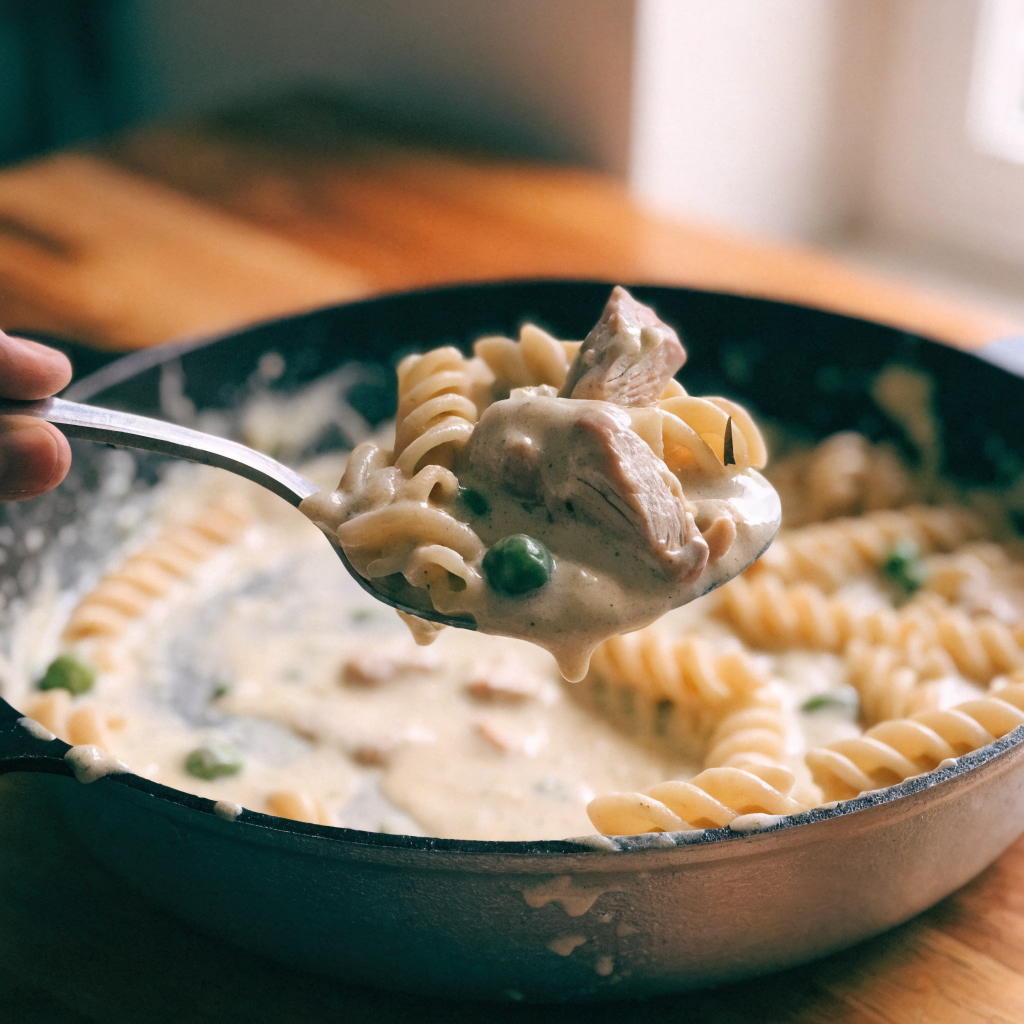
Crock Pot Chicken Pot Pie Pasta
Ingredients
Equipment
Method
- Optional: In a 12-inch skillet, melt 2 tablespoons butter over medium heat and sauté the diced onion and minced garlic until softened, about 4 minutes; transfer to the slow cooker.
- Place 1½ pounds boneless skinless chicken thighs in the slow cooker and add 2 cups diced carrots, 1½ cups diced celery, 1 cup thawed frozen peas, 1½ cups low-sodium chicken broth, 1 cup whole milk, 1 teaspoon salt, ½ teaspoon black pepper, 1 teaspoon dried thyme, and 2 bay leaves.
- Cover and cook on LOW for 3½–4 hours or on HIGH for 2–2½ hours, until chicken reaches 165°F and vegetables are tender.
- Remove the chicken to a bowl and shred with two forks; discard bay leaves.
- Pour the cooking liquid into a 12-inch skillet or Dutch oven over medium-high heat and bring to a simmer; reduce for 8–12 minutes until the liquid has concentrated and steam shows less vigorously.
- Whisk 2 tablespoons flour with 3 tablespoons cold water to make a slurry, then whisk it into the simmering sauce and cook 2–3 minutes until the sauce coats the back of a spoon; if too thick, whisk in up to ½ cup stock or milk.
- Lower heat to medium-low and stir the shredded chicken back into the reduced sauce; add 8 ounces dry short pasta and cover, simmering gently and stirring every 2 minutes until pasta is al dente, about 8–10 minutes (add 2–4 tablespoons warm broth if the sauce absorbs too quickly).
- Remove from heat and stir in 1 cup shredded sharp cheddar and 2 tablespoons chopped parsley until the cheese melts and the sauce is glossy; taste and adjust seasoning before serving.
Notes
Frequently asked questions
Can I use frozen chicken? No, start with thawed chicken for even and safe slow cooking; frozen poultry should be thawed in the refrigerator first. Thawing prevents the outer meat from overcooking while the center reaches a safe temperature.
Can I make this on HIGH in a smaller slow cooker? Yes, you can speed cook on HIGH, but check meat sooner for doneness; smaller cookers run hotter so reduce the HIGH time by 20–30 minutes and confirm the chicken reaches 165°F.
Why did my sauce separate? Separation usually means the sauce was overheated or too thin when the thickener was added. Reduce the sauce over medium heat first, then use a small cold slurry and simmer gently to bring it together.
Can I use a different pasta shape? Absolutely. Small shapes like shells, rotini, or penne work best because they hold saucy bits—adjust cooking time to al dente according to the package and test early.
Can I double this recipe? You can double it if your slow cooker has the capacity (10–12 quart). Keep the liquid ratio similar and expect longer cooking and reduction times; you may need to reduce the sauce in batches on the stovetop.
Closing
This Crock Pot Chicken Pot Pie Pasta gives you the hands-off comfort of slow-braised chicken with a reliably creamy finish by finishing the sauce on the stovetop and adding pasta last—my go-to way to keep texture intact and flavor concentrated for easy weeknight dinners.


Leave a Reply