The first time I made this chicken rice soup I burned the bottom of the pot while trying to rush the rice—lesson learned fast. This version of chicken rice soup (stove or slow cooker) keeps the rice tender without turning gluey and gives simple cues so you know when the chicken is done without a thermometer. I developed both a stovetop and a slow-cooker path so you can make the same comforting bowl whether you have a full hour or need hands-off warmth all day.
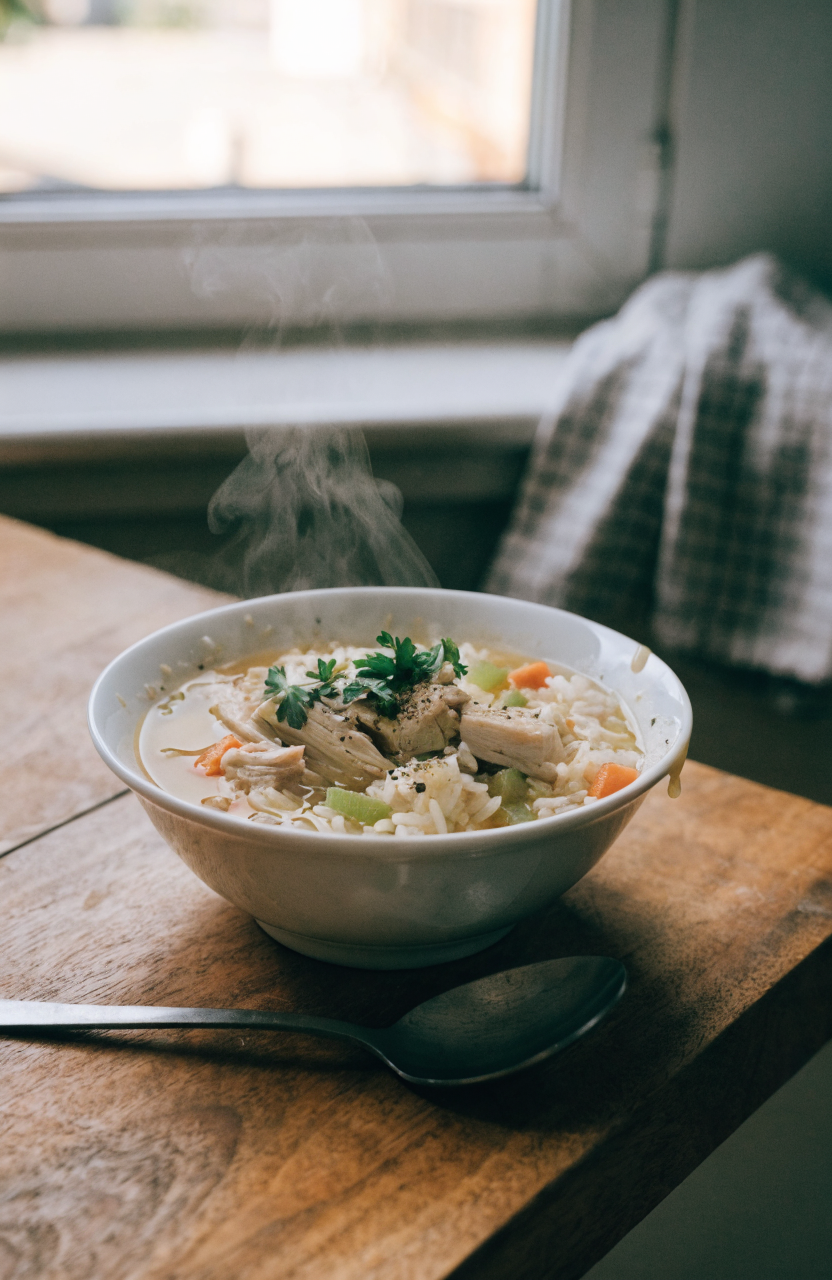
Why this chicken rice soup works
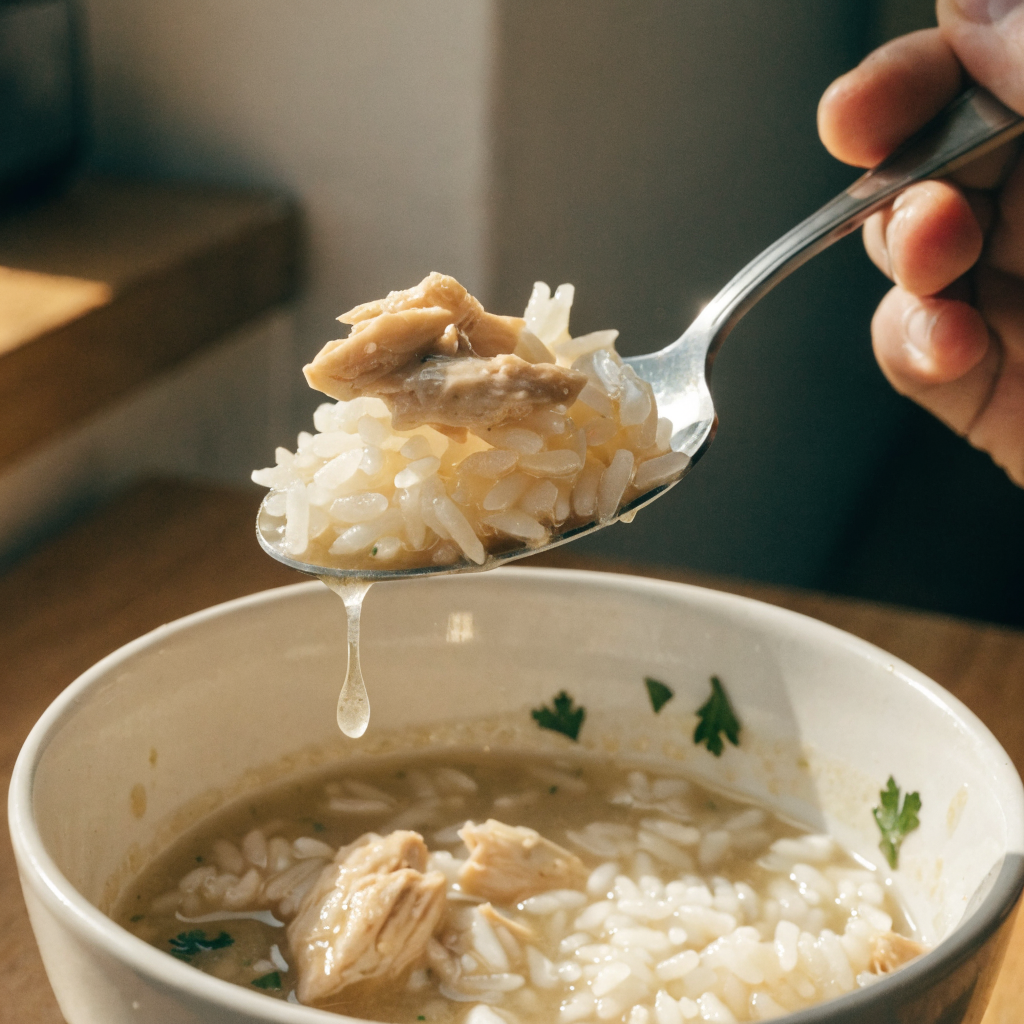
Chicken rice soup can go wrong in two obvious ways: the rice becomes mush long before the chicken is cooked, or the chicken dries out while you wait for the rice to finish. What made this recipe reliable is separating the timing and technique for each main component. On the stove I use parboiled long-grain rice added near the end so it cooks to a separate tender bite; in the slow cooker I par-cook the rice and finish it briefly off-heat to stop carryover softening. I also use bone-in chicken for flavor during simmering and remove it to shred, then return it to the broth for a short final warm-through—this keeps the meat moist. During testing I switched from adding raw rice at the start to adding it later, which prevented the mushy texture that I hit the first time.
Key takeaways
- Timing matters: add rice late or par-cook it to prevent soggy grains.
- Use bone-in chicken for flavor, remove and shred to keep meat tender.
- Salt the broth gradually and taste at the end; rice and reduced broth concentrate salt.
Ingredients you’ll need and what to substitute
For a clear, flavorful soup you only need a few reliable ingredients: a mix of onions, carrots, and celery for the classic mirepoix base; garlic for background savor; chicken (bone-in thighs or a whole small chicken) for body and flavor; and long-grain rice for separate, fluffy grains. I prefer long-grain white or parboiled rice because it keeps its shape in soup. Short-grain and brown rice release more starch and need different timing—see substitutions below.
Practical substitutions: if you want lower fat, use skinless chicken breasts but reduce simmer time and watch for dryness; if you only have brown rice, precook it separately and add at serving to avoid long simmering; for a gluten-free pantry, ensure your chicken broth is certified gluten-free. Budget-friendly swaps include using store-brand broth and a whole chicken instead of packaged pieces—debone after simmering and use the carcass for a second batch of stock.
Equipment
You don’t need anything exotic. For the stovetop version use a 6-quart Dutch oven or large stockpot to allow gentle simmering without crowding. For the slow-cooker version a 6-quart slow cooker works well; if yours is smaller, scale the recipe down by half or cook in batches. A fine-mesh strainer or slotted spoon helps remove bones; a cutting board and a pair of kitchen shears make shredding faster. A ladle and heatproof measuring cup are handy for skimming fat and measuring liquid.
How to make chicken rice soup
Stovetop method (about 1 hour)
Start by sautéing aromatics: heat 2 tablespoons of olive oil in a 6-quart Dutch oven over medium heat until shimmering. Add 1 large diced onion, 2 diced celery stalks, and 2 diced carrots and cook, stirring, until the onion is translucent and the vegetables soften, about 6–8 minutes. Add 3 minced garlic cloves and cook 30 seconds more until fragrant. Add 8 cups of low-sodium chicken broth and a bay leaf, scraping any browned bits from the bottom. Nestle 1 1/2 to 2 pounds of bone-in chicken thighs (skin removed if you prefer) into the broth, bring to a gentle simmer, reduce heat to low, cover, and simmer until the chicken is cooked through, 25–30 minutes. The chicken should reach 165°F and the flesh should pull away easily.
Remove the chicken to a plate and let it cool slightly. Meanwhile, taste the broth and season cautiously with 1 to 1 1/2 teaspoons kosher salt (less if your broth is salted). Discard the bay leaf. Add 1 cup of rinsed long-grain white rice to the simmering broth, bring back to a gentle simmer, and cook uncovered for 18–20 minutes, stirring occasionally and watching for a rolling simmer rather than a hard boil, which can cause rice to break apart. While the rice cooks, shred the chicken meat with two forks and discard bones.
When the rice is tender but still separate, return the shredded chicken to the pot and stir in 2 tablespoons chopped fresh parsley and 2 tablespoons fresh lemon juice (optional for brightness). Warm through for 2–3 minutes, taste and adjust salt, then serve. The rice will continue to soak up broth as it sits—if you plan on leftovers, undercook rice by 1–2 minutes or add a splash of hot broth when reheating.
Slow-cooker method (6–8 hours low or 3–4 hours high)
For a hands-off day, start by sautéing the onion, carrot, and celery in a 10-inch skillet with 2 tablespoons olive oil until softened, about 6 minutes—this step adds flavor but you can skip it if short on time. Transfer the vegetables to a 6-quart slow cooker with 8 cups chicken broth, 1 bay leaf, 1 1/2 teaspoons kosher salt, 1 teaspoon black pepper, and 1 1/2 to 2 pounds bone-in chicken thighs. Cook on low for 6–8 hours or high for 3–4 hours until the chicken is tender.
Remove the chicken and shred it, strain or skim the broth if needed, then return the chicken to the cooker. Here’s the important part for rice: par-cook 1 cup long-grain white rice separately on the stove for 8–10 minutes (it should be slightly undercooked), drain, and add to the slow cooker 20–30 minutes before serving to finish cooking. Stir in parsley and lemon juice at the end, taste, and adjust salt.
Things I learned the hard way
- Don’t add raw rice at the start in a slow cooker—rice turns to mush long before chicken is fork-tender. Par-cook or add near the end.
- If your broth tastes flat, it often needs salt after the rice is added; rice absorbs salt so season at the end rather than only at the start.
- A hard boil can break grains apart—keep the soup at a gentle simmer for better texture.
- If your chicken seems dry, it was overcooked; finish chicken off in the broth rather than simmering it long after shredding.
- I once skipped sautéing the aromatics and noticed a shallower flavor—browning the onion and carrots first adds depth that simmering alone can’t match.
Variations to try
Greek-style: Stir in 1/4 cup orzo instead of rice and finish with 2 tablespoons dill and lemon slices; reduce broth slightly and watch the orzo, which cooks faster.
Vegetable-forward: Add 1 cup diced zucchini and a cup of frozen peas in the last 10 minutes of cooking; no timing changes needed for the rice if added as directed.
Brown rice: Use 3/4 cup quick-cooking brown rice and add it 30–35 minutes before the end on the stovetop, or fully cook separately and add at serving for slow cooker use.
Storage, freezing, and reheating
Refrigerate cooled soup in airtight containers for up to 4 days; rice will absorb broth and soften over time. To reheat, warm gently on the stovetop over medium-low and add 1/2 cup hot chicken broth per quart to refresh the texture, stirring until the soup is simmering. Freezing is okay for broth and shredded chicken alone for up to 3 months; rice tends to become very soft after freezing and thawing, so I recommend freezing the soup without rice and cooking fresh rice when you’re ready to serve. To freeze, cool completely, portion into freezer-safe containers, leaving 1/2-inch headspace, and thaw overnight in the refrigerator before reheating.
What to serve with chicken rice soup
Classic pairings that make a light meal include crusty bread or buttered toast, a simple green salad with vinaigrette, or roasted vegetables for a heartier plate. For sandwiches, a grilled cheese with sharp cheddar balances the gentle broth. A squeeze of fresh lemon on the bowl brightens the whole meal.
No-Fail Chicken Rice Soup (Stovetop or Slow Cooker)
Ingredients
Equipment
Method
- Heat 2 tablespoons olive oil in a 6-quart Dutch oven over medium heat; add the diced onion, celery, and carrots and cook until the onion is translucent, about 6–8 minutes.
- Stir in the minced garlic and cook for 30 seconds until fragrant, then add 8 cups chicken broth and 1 bay leaf, scraping up any browned bits.
- Add the bone-in chicken thighs to the pot, bring to a gentle simmer, reduce heat to low, cover, and simmer until the chicken reaches 165°F and pulls away easily, 25–30 minutes.
- Remove the chicken to a plate and let cool slightly; taste the broth and add 1 to 1 1/2 teaspoons kosher salt if needed.
- Add 1 cup rinsed long-grain white rice to the simmering broth, return to a gentle simmer, and cook uncovered for 18–20 minutes until the rice is tender but separate.
- Shred the cooled chicken with two forks, discard bones, return the shredded meat to the pot, stir in 2 tablespoons chopped parsley and 2 tablespoons lemon juice if using, warm 2–3 minutes, adjust seasoning, and serve.
- If using a slow cooker, sauté the diced onion, celery, and carrots in 2 tablespoons olive oil in a skillet over medium heat until softened, about 6 minutes; transfer to a 6-quart slow cooker.
- Add 8 cups chicken broth, 1 bay leaf, 1 to 1 1/2 teaspoons kosher salt, 1/2 teaspoon black pepper, and the bone-in chicken thighs to the slow cooker and cook on low for 6–8 hours or high for 3–4 hours until the chicken is very tender.
- Remove the chicken, shred and discard bones, strain or skim the broth if desired, then return shredded chicken to the slow cooker.
- Par-cook 1 cup long-grain rice on the stove for 8–10 minutes (it should be slightly undercooked), drain, and add to the slow cooker 20–30 minutes before serving so the rice finishes cooking without becoming mushy.
- Stir in parsley and lemon juice if using, taste and adjust salt, and serve.
Notes
Frequently asked questions
Can I use brown rice in chicken rice soup? Yes, but cook brown rice separately and add at the end, or use quick-cooking brown rice and add earlier; brown rice requires longer cooking and will alter timing. Cooking it separately prevents the soup from becoming over-thickened.
Is it better to use bone-in or boneless chicken? Bone-in chicken gives more flavor to the broth; remove and shred the meat to keep it tender. Boneless will work for a quicker finish but can dry out if overcooked.
How do I stop rice from getting mushy? Add rice near the end of stovetop cooking or par-cook rice before adding to a slow cooker so the grains finish cooking without breaking down. Keep the liquid at a gentle simmer, not a rolling boil.
Can I make this in an Instant Pot? Yes, use the sauté function for the aromatics, add broth and chicken, pressure-cook for 10 minutes with a natural release, shred chicken, then add rice and pressure for 6 minutes with quick release; adjust times for your model.
How long will leftovers last? In the refrigerator, store for up to 4 days; as noted, rice will absorb liquid and soften. Reheat gently and add hot broth to restore texture.
Closing
I keep a batch of this chicken rice soup bookmarked for chilly evenings because the method reliably produces separate, tender rice and juicy shredded chicken. The stovetop path is great for a planned hour, and the slow-cooker option saves a busy day—either way, you end up with a bowl that smells like home and warms from the inside out.


Leave a Reply