I first tested this cranberry rosemary chicken on a chilly November afternoon when I wanted something bright but simple: the focus keyword appeared on a grocery list and in my oven. Cranberry rosemary chicken starts with searing to lock moisture, finishes in the oven with fresh rosemary and tart cranberries, and produces a glossy pan sauce that clings to the chicken—exactly what I wanted for an easy weeknight dinner or a small holiday table. I’ll show the straightforward swaps to keep it paleo or Whole30-friendly and the cues I used to prevent a watery sauce or dried-out breasts.
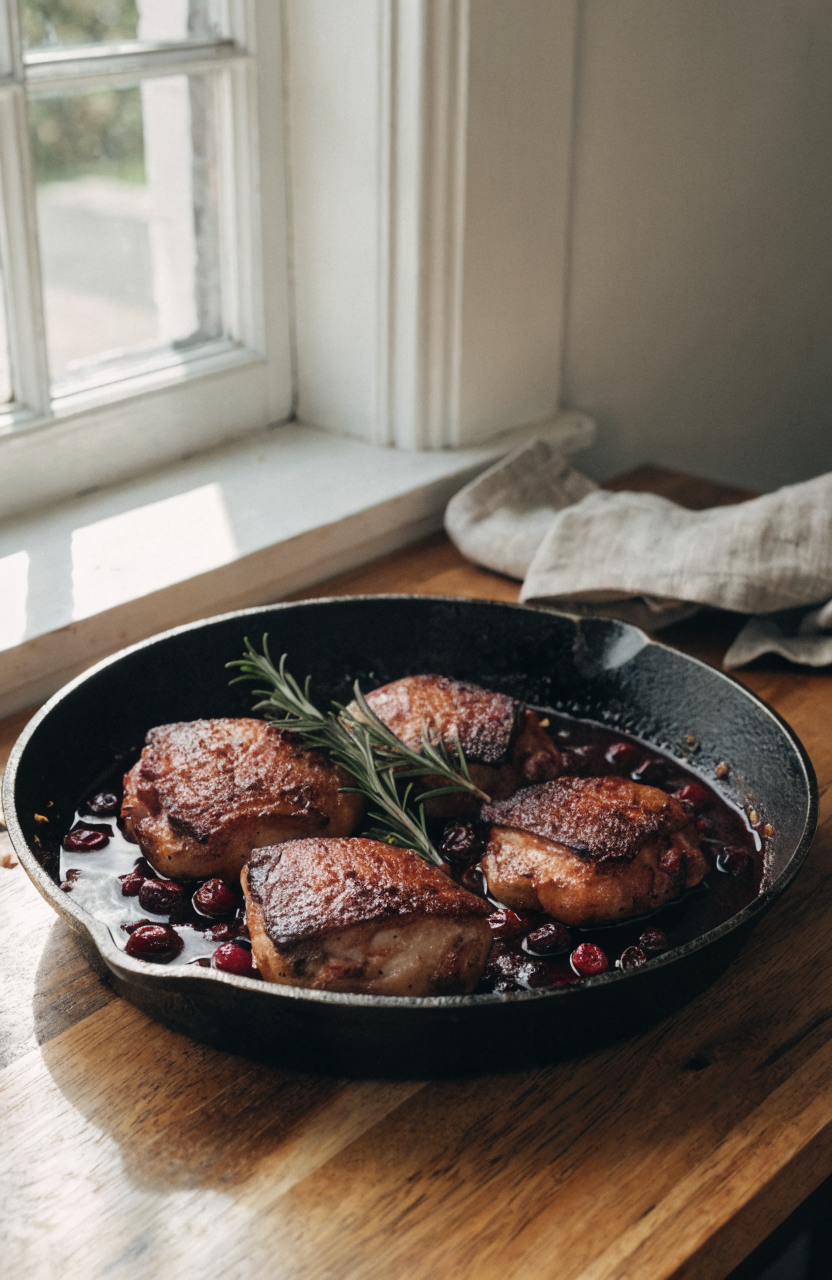
Why this cranberry rosemary chicken works
The key technique is quick stovetop searing followed by oven roasting, which gives the chicken a well-browned exterior and reliable internal doneness. I tested both bone-in thighs and skin-on breasts; the ratio of chicken to liquid is deliberately small so the cranberries concentrate into a sauce instead of diluting. Fresh rosemary and a short simmer bring out savory aromatics without masking the cranberries’ tartness. During testing I learned that adding citrus zest at the end brightens the sauce and that reducing the pan sauce briefly off the heat produces a glossy finish that sticks to the chicken.
What changed after the first attempt: my first batch used frozen cranberries straight from the bag and a splash more stock, which produced a thin, watery sauce. Reducing the stock by half and using a brief simmer produced a thicker glaze. I also switched from high oven temperature to 400°F to cook evenly and keep skin from burning while the sauce reduced.
Key takeaways
- Sear first, then roast at 400°F for consistent browning and moist meat.
- Use less liquid and reduce the sauce off-heat for a glossy glaze that isn’t watery.
- Small finishing touches—zest, a knob of ghee or olive oil, and fresh rosemary—lift the flavors without extra work.
Ingredients you’ll need and what to substitute
You need chicken with skin (bone-in thighs are my favorite for juiciness), fresh rosemary, tart cranberries (fresh or thawed frozen), a savory liquid (chicken stock or compliant vegetable stock for Whole30), and a touch of sweetener for balance. I use a single small onion and a garlic clove to build flavor right in the pan.
Substitutions that work:
- If you want leaner meat, skin-on chicken breasts can be used; expect 5–10 minutes more oven time and watch the internal temperature closely to avoid dryness.
- If you don’t have fresh rosemary, use 1 teaspoon dried rosemary, but add it earlier so it rehydrates and mellows; the aroma will be less bright.
- For paleo or Whole30 compliance, use pure maple syrup (for paleo) or a compliant date paste or omit the sweetener and rely on the cranberries and a pinch of salt to balance acidity. I test both and preferred a teaspoon of maple for paleo and none for strict Whole30.
- Use ghee or avocado oil instead of butter for paleo/Whole30-friendly fat. If you use butter, it adds richness but is not compliant with Whole30.
Measure liquids carefully: use 1/2 cup total stock for the pan to avoid dilution. If you like a saucier result, reduce the sauce longer after roasting rather than adding more stock during cooking.
Equipment
Essential tools keep this one-pan method simple and reliable:
- 12-inch oven-safe skillet (cast iron or stainless steel recommended)
- Instant-read meat thermometer
- Wooden spatula or tongs for searing
- Small bowl for combining the cranberries and seasoning
How to make cranberry rosemary chicken
Prepare and sear
Pat the chicken dry and season both sides with salt and pepper. Heat 1 tablespoon oil in a 12-inch oven-safe skillet over medium-high heat until shimmering. Place chicken skin-side down and sear without moving for 4–5 minutes until the skin is deeply golden and releases easily. Flip and sear the flesh side 1–2 minutes just to color. Remove chicken to a plate while you build the pan base.
Build the pan flavors
Reduce heat to medium. Add the diced onion and 1 tablespoon oil if the pan is dry and sauté for 3 minutes until translucent. Add 1 minced garlic clove and cook 30 seconds until fragrant. Pour in 1/2 cup chicken stock and scrape up brown bits with a wooden spatula; those bits carry most of the flavor. Stir in 1 cup cranberries and 1 tablespoon maple syrup (optional), and tuck in 2 sprigs of fresh rosemary.
Roast and finish
Return the seared chicken to the skillet, skin-side up, nestling it among the cranberries. Transfer the skillet to a preheated 400°F oven and roast for 18–25 minutes, depending on piece size: thighs will take about 20–25 minutes, breasts about 18–22 minutes. Use an instant-read thermometer: thighs are safe at 165°F and will be juicier if removed at 170°F then rested; breasts should reach 165°F and rest briefly. The cranberries will burst and release juices during roasting.
Reduce the sauce and finish
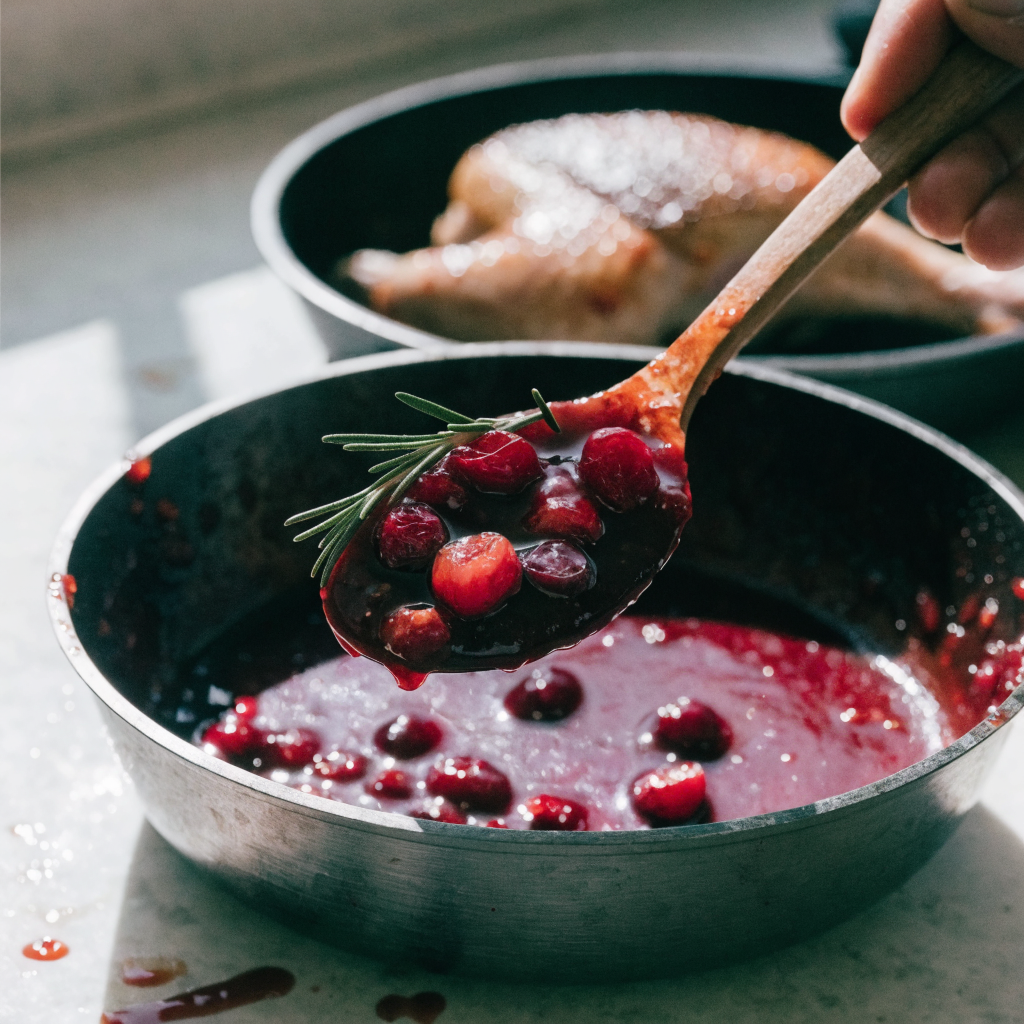
Transfer the skillet to the stovetop over medium heat. Remove rosemary sprigs. If the pan looks thin, simmer the sauce 3–6 minutes until it thickens slightly and coats a spoon; for a glossy finish stir in 1 teaspoon ghee or olive oil off the heat. Taste and add a pinch of salt, a half-teaspoon lemon zest, or more maple syrup if you want extra sweetness. Spoon the sauce over the chicken and serve warm.
Important doneness cues: look for juices that run clear around the thighs, slightly springy breast meat, and an internal temp of 165°F. The skin should be browned and not soggy; if the skin softened during roasting, broil 1–2 minutes while watching carefully to crisp it.
Things I learned the hard way
- Dry chicken from overcooking: I once roasted breasts to 175°F; they were dry. Use an instant-read thermometer and remove at 165°F, then rest five minutes.
- Watery sauce from too much stock: my first trial used 1 cup stock and the sauce stayed thin. Stick to 1/2 cup and reduce after roasting for a glaze.
- Burnt rosemary aroma: whole sprigs add flavor during roasting, but if you leave tiny leaves in the pan during high-heat searing they can scorch. Add whole sprigs at the simmer stage and remove before reducing.
- Frozen cranberries can water down the sauce: thaw in a sieve over a bowl and drain briefly, or add frozen berries but simmer longer to evaporate excess water.
- Uneven browning from crowded pan: sear in batches if necessary. Overcrowding traps steam and prevents crisp skin.
- First attempt mistake: I tried sautéing cranberries with uncooked chicken in the pan; they took on a bitter char. Sear the chicken first, then build the sauce separately.
Variations to try
- Maple-Mustard Twist: Stir 1 tablespoon Dijon mustard into the reduced sauce for a tangy counterpoint; reduce the maple syrup to 1 teaspoon. No cook-time change, but taste before plating.
- Orange-Rosemary: Add 1 tablespoon fresh orange juice and 1 teaspoon orange zest to the sauce at the end for a citrus lift; if using breasts, reduce oven time by 2–3 minutes to prevent drying.
- Mushroom and Cranberry Pan: Add 8 ounces sliced cremini mushrooms with the onions and sauté until browned; this increases total cook time by about 5 minutes while adding earthy depth.
- Paleo/Whole30 compliant: Use ghee or avocado oil, omit maple syrup for strict Whole30, and use compliant chicken stock; timing and temperatures remain the same.
Storage, freezing, and reheating
Refrigerate leftovers in an airtight container for up to 3–4 days. Store chicken separate from the sauce if possible to keep skin from softening. To reheat, warm gently in a 325°F oven for 10–15 minutes until the internal temperature reaches 165°F, or reheat covered in a skillet over low heat until warmed through and then reduce the sauce briefly to refresh the glaze. Freezing is possible for up to 2 months: freeze portions in freezer-safe containers with sauce. Thaw overnight in the refrigerator and reheat as above; expect some texture change in the cranberries (they’ll be softer after freezing).
What to serve with cranberry rosemary chicken
This one-pan chicken pairs nicely with simple, sturdy sides that soak up sauce: roasted root vegetables, mashed cauliflower (for paleo), herbed quinoa, or a warm grain salad. For a lighter plate try sautéed green beans with lemon or a simple mixed greens salad dressed with a mustard vinaigrette. Bread is optional; if you serve crusty bread, use it to mop up the flavorful pan sauce.
Cranberry Rosemary One-Pan Chicken
Ingredients
Equipment
Method
- Preheat oven to 400°F. Pat chicken dry and season both sides generously with salt and pepper.
- Heat 1 tablespoon oil in a 12-inch oven-safe skillet over medium-high heat until shimmering. Place chicken skin-side down and sear undisturbed 4–5 minutes until deeply golden, then flip and sear the flesh side 1–2 minutes. Transfer chicken to a plate.
- Reduce heat to medium and add remaining tablespoon oil if the pan is dry. Sauté diced onion 3 minutes until translucent, add minced garlic and cook 30 seconds. Pour in 1/2 cup chicken stock and scrape up browned bits.
- Stir in cranberries, maple syrup (if using), and tuck in rosemary sprigs.
- Return the seared chicken to the skillet, skin-side up, nestling pieces among the cranberries. Transfer skillet to the preheated oven and roast 18–25 minutes (about 20–25 for thighs) until an instant-read thermometer reads 165°F in the thickest part of the meat.
- Remove skillet from oven and place over medium heat on the stovetop. Remove rosemary sprigs and simmer 3–6 minutes until the sauce thickens slightly. Stir in lemon zest and 1 teaspoon ghee or olive oil off the heat for shine. Taste and adjust salt or maple syrup as needed.
- Spoon sauce over chicken, garnish with chopped parsley and extra rosemary if desired, and serve warm.
Notes
Frequently asked questions
Can I use boneless chicken thighs or breasts? Yes, boneless thighs will cook faster—reduce oven time by 5–8 minutes and check with a thermometer; breasts need close attention to avoid overcooking.
Can I make this ahead of time? You can prepare the cranberry sauce up to two days ahead and refrigerate; rewarm gently and add the seared chicken before roasting. Avoid fully cooking and storing assembled chicken to keep skin texture.
Is this recipe paleo and Whole30-friendly? The recipe can be paleo and Whole30-friendly with swaps: use ghee or avocado oil and a compliant stock, and omit maple syrup for strict Whole30. I tested both versions and found flavor remained balanced without added sweetener for Whole30.
Why is my sauce watery? A watery sauce usually means too much liquid or frozen cranberries released excess water. Reduce liquid to 1/2 cup stock and simmer the sauce after roasting to concentrate it; drain thawed cranberries briefly if using frozen.
Can I double the recipe? Yes, but use two skillets or sear in batches so the pan isn’t crowded; roast both pans in the oven, rotating positions halfway through for even cooking.
How do I keep the skin crisp? Pat the skin thoroughly dry before searing, don’t move the chicken during the initial sear, and finish with a 1–2 minute broil if the skin softens during roasting—watch closely to avoid burning.
Closing
Cranberry rosemary chicken brings a seasonal brightness to a straightforward roast that I now turn to for both weeknights and small holiday meals; follow the sear-first method, watch the internal temperature, and reduce the sauce for a glossy finish that clings to the chicken—then enjoy the leftovers cold or reheated the next day.




Leave a Reply