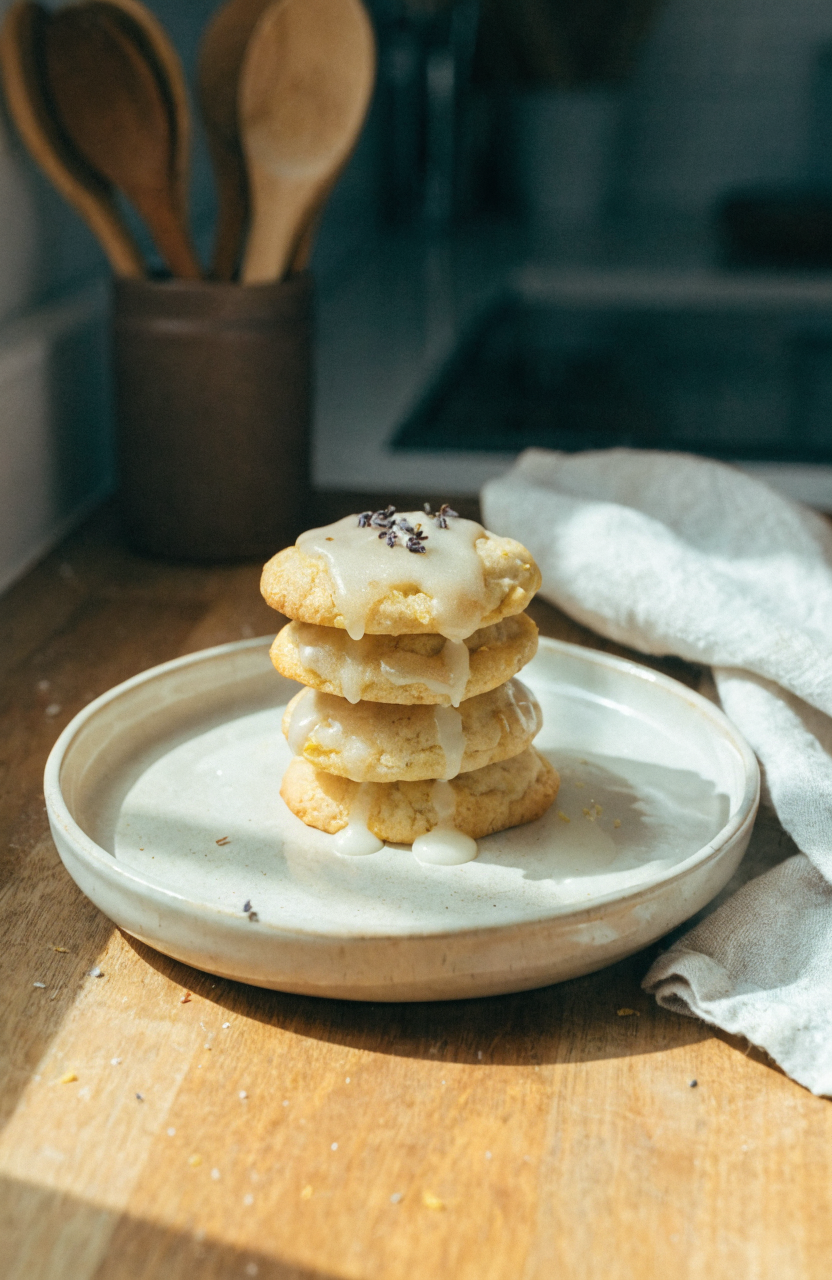
I remember the first time I tried to bake lemon lavender cookies: the kitchen smelled faintly of soap and the lavender tasted perfumy and one-dimensional. After several tests I settled on toasting the dried buds briefly and using a tangy lemon glaze to brighten the whole cookie — that change made the floral note gentle, not soapy. These lemon lavender cookies bake into soft, slightly crisp-edged rounds with a tender interior and a tiny crackle of glaze on top.
Why this lemon lavender cookies recipe works
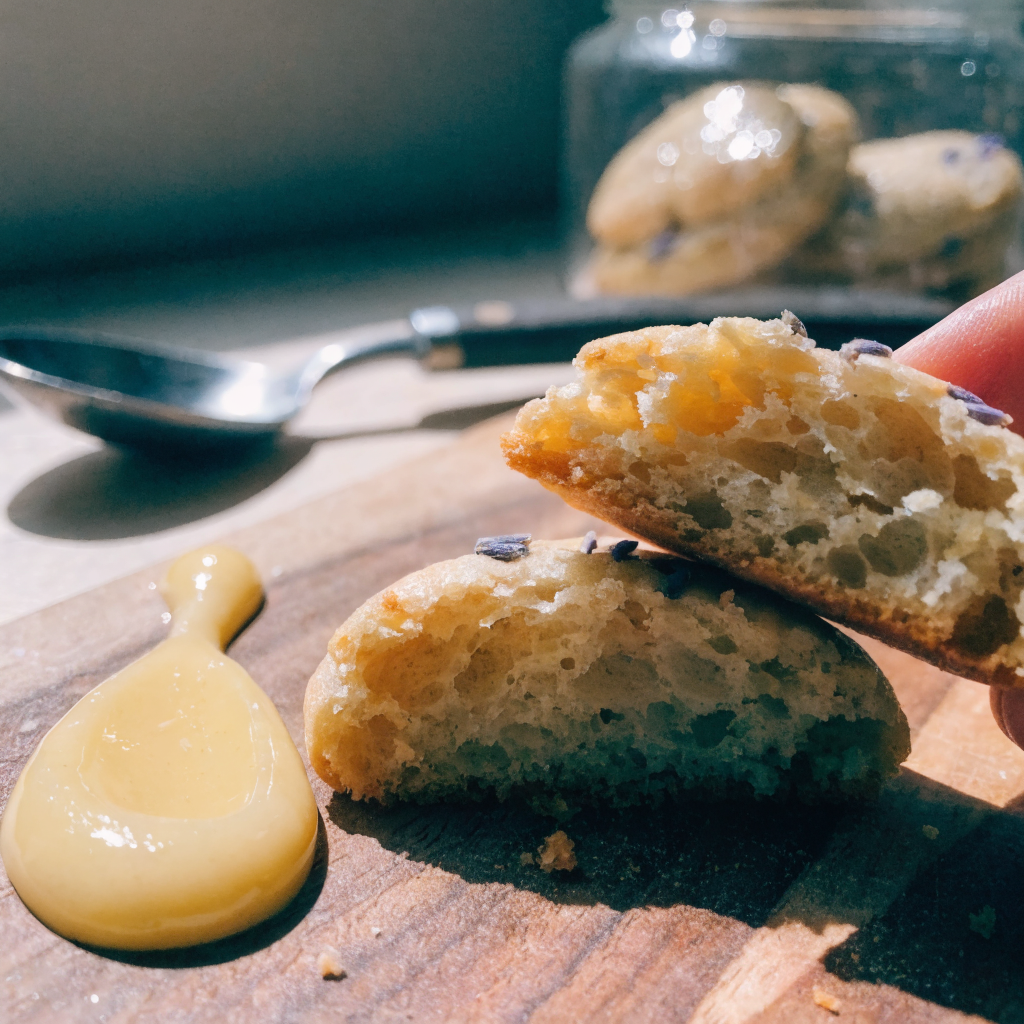
The trick that makes these lemon lavender cookies work is twofold: first, toasting the dried lavender brings out warmer, herbal notes and removes that soapy edge many home bakers complain about. Second, the cookie dough uses a higher ratio of butter to flour than some recipes for a softer, tender crumb, while a small amount of cornstarch keeps the texture pillowy. I also add lemon zest directly to the dough — not just the glaze — so each bite carries citrus brightness. During testing I discovered that adding the glaze while the cookies are still slightly warm gives a thin, crackled top that holds a little shine without softening the cookie underneath.
Key takeaways
- Lightly toast dried lavender to tame harsh floral notes.
- A bit of cornstarch in the dough yields a tender, soft crumb.
- Lemon in both dough and glaze ensures bright, balanced citrus flavor.
- Glazing while warm creates a thin, set finish without sogginess.
Ingredients you’ll need and what to substitute
The ingredient list is straightforward pantry baking staples plus culinary (dried) lavender and lemons. Use culinary lavender only — not craft or lavender intended for potpourri. I prefer using unsalted butter so I can control salt; if you only have salted butter, omit the extra pinch of salt in the recipe. The cornstarch is optional but recommended for texture; if you don’t have it, you can replace it with an equal amount of extra flour, but the cookies will be slightly firmer.
Substitutions:
- Lavender: If you can’t find culinary lavender, use 1 teaspoon finely grated lemon zest extra (no lavender), and increase vanilla by 1/4 teaspoon for aromatic depth.
- Butter: Use an equal amount of European-style butter for a richer flavor, but reduce added salt by 1/8 teaspoon if your butter is salted and particularly salty.
- All-purpose flour: For a slightly cakier cookie, replace up to 1/4 cup of flour with cake flour and reduce mixing time slightly.
Equipment
You don’t need anything exotic. A sturdy baking sheet and parchment paper are key so bottoms brown evenly without sticking. A small skillet for toasting lavender is useful, and a microplane makes zesting lemons fast. If you plan to scoop many cookies, a 1.5-tablespoon cookie scoop keeps sizes consistent.
- Large rimmed baking sheet (half-sheet works well)
- Small skillet for toasting dried lavender
- 1.5-tablespoon cookie scoop or tablespoon
How to make lemon lavender cookies
Toast the lavender and prep
Start by measuring 1 tablespoon of dried culinary lavender and place it in a dry small skillet over medium-low heat. Toast, shaking the pan, for 30–45 seconds until fragrant — do not let it brown. Remove and let cool, then give it a quick chop or crush with the back of a spoon so the buds are smaller. Meanwhile, preheat your oven to 350°F and line a baking sheet with parchment.
Make the dough
Cream together room-temperature unsalted butter (1 cup) and granulated sugar (1 cup) until light and slightly fluffy, about 2–3 minutes with a hand mixer or 1.5–2 minutes with a stand mixer. Beat in one large egg and 1 teaspoon vanilla extract, scraping the bowl. Fold in 2 tablespoons fresh lemon juice and the zest of 2 lemons (about 2 tablespoons packed zest) for full citrus flavor. In a separate bowl whisk together 2 1/4 cups all-purpose flour, 2 teaspoons cornstarch, 1/2 teaspoon baking soda, and 1/2 teaspoon salt. Add the dry mix to the wet in two additions, mixing gently until just combined. Fold in the toasted, chopped lavender.
Shape and bake
Use a 1.5-tablespoon scoop to portion dough about 1 inch apart on the prepared sheet. For a slightly flatter cookie, gently press each ball down with the bottom of a glass or your palm. Bake at 350°F for 10–12 minutes, until the edges are set and just beginning to turn golden while centers still look slightly soft. Remove from the oven and let sit on the sheet for 3 minutes — this resting time finishes cooking and stabilizes the shape — then transfer to a wire rack to cool slightly for glazing.
Prepare the glaze and finish
Whisk together 1 cup powdered sugar with 2–3 tablespoons fresh lemon juice until smooth and pourable but thick enough to coat the back of a spoon; start with 2 tablespoons and add more if needed. While cookies are still warm but not piping hot (about 5 minutes off the sheet), spoon or drizzle roughly 1/2 tablespoon of glaze onto each cookie. The glaze should set to a thin crackled finish within 15–20 minutes. For a lighter floral touch, sprinkle a few reserved toasted lavender bits on top of the glaze before it sets.
Things I learned the hard way
- Too much lavender tastes soapy — measuring carefully and toasting reduces harshness.
- If the dough is overmixed once flour is added, cookies become dense; stop mixing when no streaks of flour remain.
- Glazing while cookies are hot works best; waiting until fully cooled can lead to dull, thick glaze instead of a thin sheen.
- Using chilled butter makes spreading minimal; room-temperature butter gives a softer center — I prefer room-temp for texture here.
- If your cookies spread too much, reduce oven temperature by 10°F or chill scooped dough 10 minutes before baking.
- First attempt had flat, greasy cookies — I reduced butter by 2 tablespoons and added cornstarch to fix the texture.
Variations to try
- Lavender-Lemon Thumbprints: Make smaller 1-tablespoon rounds, press centers, and fill with lemon curd after baking; bake for 9–10 minutes and cool completely before filling.
- Honey-Lavender: Replace 1/4 cup of granulated sugar with 1/4 cup mild-flavored honey and reduce liquid by 1/2 tablespoon; bake the same but watch for slight extra browning.
- Gluten-light: Replace 1/2 cup of flour with almond flour and reduce baking time by 1 minute; cookies will be softer and more fragile.
- Vanilla-Forward: Increase vanilla extract to 1 1/2 teaspoons and omit lemon zest in dough, keeping lemon in glaze only for a subtler citrus top note.
Storage, freezing, and reheating
Store glazed cookies in an airtight container at room temperature for up to 3 days; separate layers with parchment to prevent sticking. Un-glazed cookies keep for 4 days and will stay fresher longer. These cookies freeze well: scoop and freeze raw dough balls on a tray until firm, then transfer to a freezer bag for up to 3 months; bake from frozen adding 1–2 minutes to the bake time. Baked cookies can be frozen up to 2 months — thaw at room temperature and refresh in a 300°F oven for 3–4 minutes if you want the glaze to regain a slight sheen.
What to serve with lemon lavender cookies
These cookies pair nicely with simple beverages and light desserts. Try them with a cup of Earl Grey or green tea, alongside lemon curd for a zesty spread, or with a bowl of fresh berries and whipped cream for a springtime dessert platter. They also work well on a brunch buffet next to scones and yogurt parfaits.

Lemon Lavender Cookies with Lemon Glaze
Ingredients
Equipment
Method
- Measure 1 tablespoon dried culinary lavender and toast in a dry small skillet over medium-low heat for 30–45 seconds until fragrant; cool and chop finely. Preheat oven to 350°F and line a baking sheet with parchment.
- In a large bowl, cream 1 cup room-temperature unsalted butter and 1 cup granulated sugar until light and fluffy, about 2–3 minutes; beat in 1 large egg, 1 teaspoon vanilla extract, 2 tablespoons fresh lemon juice, and zest of 2 lemons until combined.
- Whisk together 2 1/4 cups all-purpose flour, 2 teaspoons cornstarch, 1/2 teaspoon baking soda, and 1/2 teaspoon salt in a separate bowl. Add the dry ingredients to the wet in two additions, mixing just until no streaks of flour remain. Fold in the toasted, chopped lavender.
- Portion dough with a 1.5-tablespoon scoop onto the prepared sheet about 1 inch apart; gently flatten slightly if you prefer flatter cookies. Bake at 350°F for 10–12 minutes until edges are set and centers look slightly soft. Let rest on the sheet for 3 minutes, then transfer to a wire rack.
- Whisk 1 cup powdered sugar with 2 tablespoons lemon juice, adding up to 1 more tablespoon if needed, to reach a smooth, spoonable glaze. While cookies are warm (about 5 minutes off the sheet), spoon or drizzle roughly 1/2 tablespoon glaze over each cookie and sprinkle reserved lavender if using. Let set 15–20 minutes before serving.
Notes
Frequently asked questions
Can I use fresh lavender? Not recommended — fresh lavender contains more moisture and will change dough texture; stick to dried culinary lavender for predictable results.
Do I have to toast the lavender? Toasting is highly recommended; it mellows harsh floral notes and deepens the aroma without browning, which helps the cookies taste more balanced.
Can I skip the glaze? Yes. The cookies are pleasant un-glazed; omit the glaze and reduce lemon juice in dough to 1 tablespoon so the flavor remains balanced.
How do I prevent my cookies from spreading too much? Ensure butter is fully softened but not melting; reduce oven temperature by 10°F or briefly chill scooped dough if spreading is excessive.
Can I make the dough ahead? You can refrigerate the dough (scooped) for up to 24 hours; add 1–2 minutes to the bake time if baking from cold.
Are these cookies freezer-friendly? Yes — raw dough balls freeze well up to 3 months and baked cookies freeze up to 2 months; thaw at room temperature before serving.
Closing
These lemon lavender cookies finally gave me the citrus-floral balance I was chasing: a tender, buttery bite with fresh lemon brightness and a soft, aromatic hint of lavender. The toasting and glazing tips help tame strong floral notes while keeping the cookies soft and pleasantly bright. Serve them with tea or pack a few for a picnic — they travel well and remain tender for several days.

Leave a Reply