On a humid evening when Georgia peaches were at peak sweetness I tested a version of fresh peach cobbler that actually held its texture after cooling—no watery pool under the biscuits. My recipe for fresh peach cobbler balances a short maceration step with a modest thickener and a biscuit topping that browns without overcooking the fruit below. If you want honest cues for doneness, dependable substitutions, and a cobbler that stays spoonable the next day, keep reading.
Why this fresh peach cobbler works
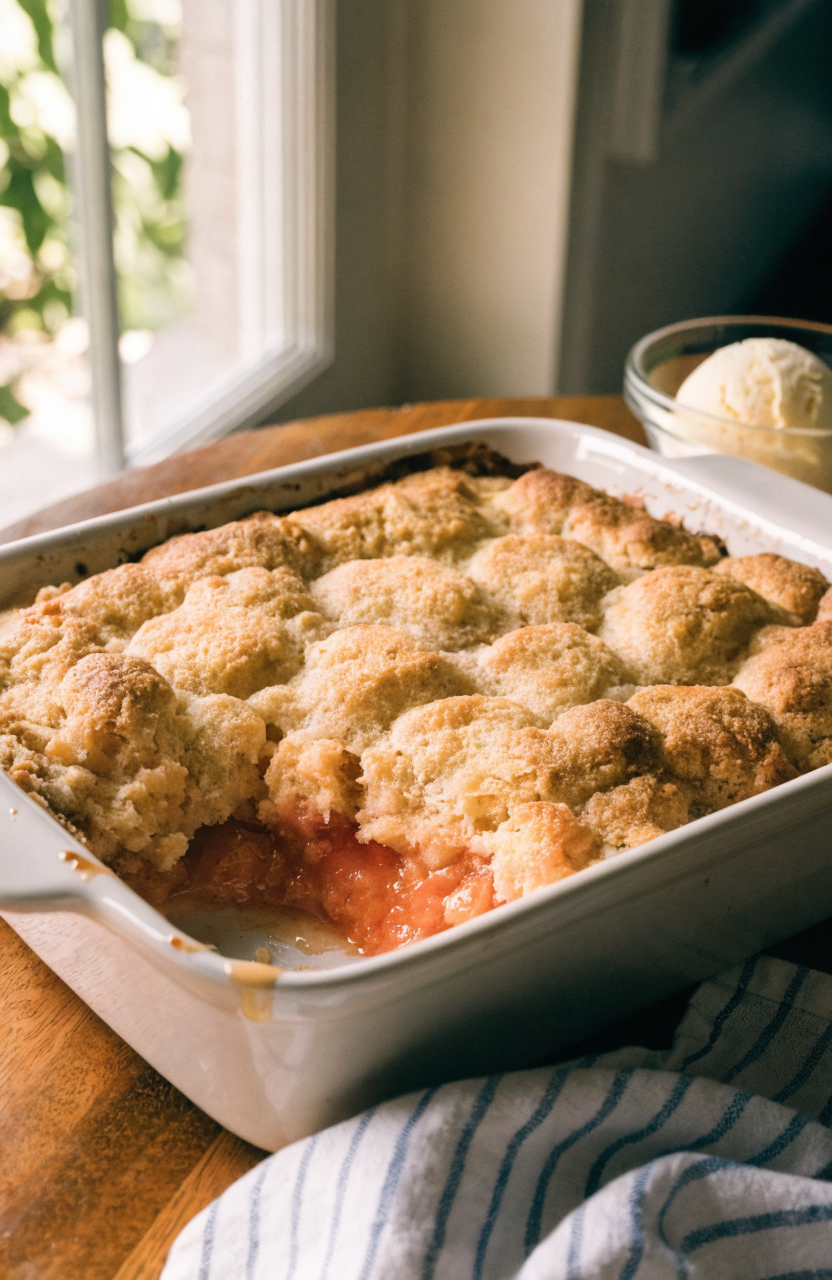
The key technique is simple: macerate the sliced peaches briefly with sugar and lemon, then heat the mixture just enough to activate cornstarch and concentrate the juices. That gives the filling body without overcooking the fruit. For the topping I use a drop-style biscuit batter (flaky, not cakey) that bakes on top of the bubbling fruit and finishes crisp at the edges while remaining tender inside. During testing I first tried a raw-topped cobbler that steamed the biscuits and left a soggy underside; switching to a slightly stiffer biscuit dough and preheating the oven to a true 400°F gave better browning and texture.
Key takeaways
- Short maceration then gentle simmer prevents watery filling.
- A biscuit-style topping baked at 400°F crisps edges while keeping interior tender.
- Cornstarch (not flour) preserves peach clarity and bright flavor.
- Use visual cues—syrup thickens and biscuits are golden with set centers—for reliable results.
Ingredients you’ll need and what to substitute
This cobbler uses fresh peaches, a small amount of cornstarch to thicken, and a drop-biscuit topping made with butter and buttermilk (or a substitute). Fresh ripe peaches are best—look for fruit that gives a little when pressed and smells sweet. If peaches are underripe, you can use very ripe nectarines or a mix of both; the texture will change slightly. For thickening I prefer cornstarch because it clears and maintains a glossy syrup; arrowroot works too (use the same amount). If you don’t have buttermilk, use 1 cup milk mixed with 1 tablespoon lemon juice or white vinegar and let it sit 5 minutes—this produces a similar acidity that helps the biscuits rise and keeps them tender.
If you need a dairy-free option, use a neutral oil (like vegetable) in place of butter in the topping and swap non-dairy milk plus 1 tablespoon vinegar for buttermilk. Note: texture will be slightly less rich and the biscuits will be a touch less flaky.
Equipment
Essential items include a 9×13-inch baking dish (deep enough to hold bubbling fruit), a medium saucepan for macerating and thickening, a mixing bowl for the biscuit topping, and a rimmed baking sheet to catch any overflow. A pastry cutter or two forks helps cut butter into the dry topping quickly; a cast-iron skillet (10–12 inch) is an excellent alternative to a baking dish if you want a rustic presentation and slightly crisper edges. If you use a skillet, reduce oven time by a few minutes—watch closely.
How to make fresh peach cobbler
Prepare the peaches
Start by peeling and slicing about 3 pounds of ripe peaches. To remove skins easily, score an X at the blossom end, blanch peaches in boiling water for 20–30 seconds, then transfer to an ice bath; skins will slip off. Slice peaches into 1/2-inch wedges and transfer to a bowl. Add 1/2 cup granulated sugar, 1 tablespoon lemon juice, 1 teaspoon vanilla extract, and 2 tablespoons cornstarch; toss gently to coat. Let the peaches sit 20–30 minutes—the sugar will draw out juices and the cornstarch will begin absorbing them.
Cook the filling
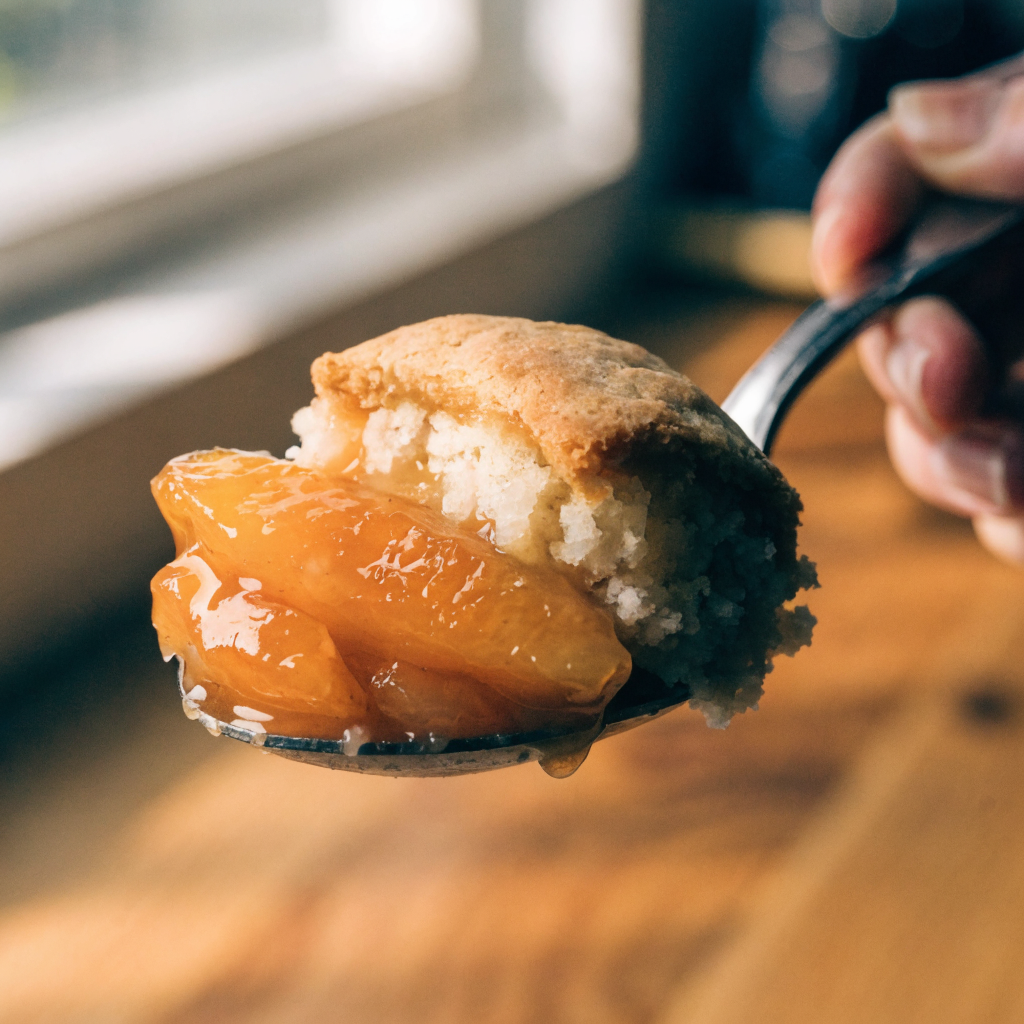
Pour the macerated peaches and their juices into a medium saucepan and warm over medium heat until the mixture barely simmers, stirring gently for 3–4 minutes until the syrup thickens and becomes glossy. Cooking helps the cornstarch finish activating without cooking the peaches to mush. Taste and add up to 1/4 teaspoon salt if needed to balance sweetness and bring out peach flavor. Remove from heat and pour the fruit into a greased 9×13-inch baking dish so the fruit layer is even. Save any thickened syrup in the pan and spread it back over the fruit so the juices are distributed.
Make the biscuit topping
Preheat the oven to 400°F with the rack in the middle. In a large bowl whisk 2 cups all-purpose flour, 1/3 cup granulated sugar, 1 tablespoon baking powder, and 1/2 teaspoon salt. Cut 10 tablespoons cold unsalted butter into small pieces and use a pastry cutter or two forks to work the butter into the dry mix until the texture resembles coarse crumbs with some pea-size bits. Stir in 1/2 cup cold buttermilk and 1/4 cup whole milk just until the dough comes together; don’t overmix. The batter should be thicker than cake batter but spoonable—a drop-biscuit consistency.
Assemble and bake
Drop heaping spoonfuls of the biscuit batter over the peach filling, leaving small gaps so steam can escape and syrup can bubble up around the edges. Brush the biscuit tops lightly with a little melted butter and sprinkle 1 tablespoon coarse sugar for sparkle if desired. Place the baking dish on a rimmed sheet to catch drips and bake at 400°F for 25–30 minutes, until the biscuits are golden brown, slightly domed, and the filling is bubbling at the edges. If the biscuits brown too quickly but aren’t set, tent loosely with foil for the last 5–10 minutes. Let the cobbler rest 15–20 minutes before serving—the filling will thicken slightly as it cools and slices will hold better.
Things I learned the hard way
- Don’t skip the short maceration—raw sugar on peaches won’t dissolve and the filling stays grainy. Twenty minutes gives good flavor extraction.
- Using flour to thicken made the syrup cloudy and pasty; cornstarch keeps the color clear and the flavor bright.
- If the topping is too wet the biscuits steam and the bottom stays soggy; aim for a drop-biscuit batter rather than a pourable batter.
- Baking at a lower temperature to “be safe” prevents proper browning; 400°F gives a crisp edge while cooking the center through.
- My first attempt used frozen peaches; they released too much water and turned the filling thin—if using frozen, thaw and drain excess juice, then reduce added sugar by 1–2 tablespoons.
Variations to try
- Ginger-Maple Peach Cobbler: Add 1/2 teaspoon ground ginger to the filling and replace 2 tablespoons sugar with 2 tablespoons pure maple syrup for a warm note; bake the same.
- Almond Biscuit Topping: Stir 1/2 teaspoon almond extract into the biscuit batter and fold in 1/3 cup sliced almonds for crunch; watch for quicker browning.
- Skillet Single-Peel Version: Use an oven-safe 10–12 inch cast-iron skillet and increase baking time by 3–5 minutes for a deeper fruit layer and crisper perimeter.
- Fruit Mix Cobbler: Substitute up to 1 pound of peaches with sliced plums or berries; if adding berries, reduce cornstarch by 1/2 tablespoon because berries release more juice.
Storage, freezing, and reheating
Refrigerate leftover cobbler in an airtight container for up to 4 days. The topping will lose some crispness—reheat single servings in a 350°F oven for 10–12 minutes to restore some texture. You can freeze the baked cobbler for up to 2 months; cool completely, wrap tightly with plastic wrap and foil, then thaw overnight in the refrigerator and reheat in a 350°F oven covered for 20–30 minutes until warmed through. If you want to freeze unbaked, prepare filling and biscuit batter, and store separately in airtight containers for up to 1 month; thaw overnight and assemble before baking. Expect a slight softening after refrigeration due to syrup absorption.
What to serve with fresh peach cobbler
Classic pairings include vanilla ice cream, a dollop of whipped cream, or a scoop of plain Greek yogurt for a tangy contrast. For beverages try iced tea, cold milk, or a lightly spiced coffee. For an afternoon gathering, serve alongside a simple shortbread cookie or with fresh berries on the side to echo the fruit flavors.
Fresh Peach Cobbler with Drop-Biscuit Topping
Ingredients
Equipment
Method
- Score the bottom of each peach with a small X, blanch in boiling water 20–30 seconds, transfer to an ice bath, peel, and slice into 1/2-inch wedges.
- Toss sliced peaches with 1/2 cup sugar, 1 tablespoon lemon juice, 1 teaspoon vanilla, 2 tablespoons cornstarch, and 1/8 teaspoon salt; let sit 20–30 minutes to macerate.
- Transfer peaches and any released juices to a medium saucepan and warm over medium heat until the mixture simmers and the syrup thickens, about 3–4 minutes; remove from heat and pour evenly into a greased 9×13-inch baking dish.
- Preheat oven to 400°F with rack in the center.
- Whisk 2 cups flour, 1/3 cup sugar, 1 tablespoon baking powder, and 1/2 teaspoon salt in a bowl; cut in 10 tablespoons cold butter until the mix resembles coarse crumbs with some pea-size pieces.
- Stir in 1/2 cup cold buttermilk and 1/4 cup cold milk just until a drop-biscuit batter forms; do not overmix.
- Spoon heaping dollops of the biscuit batter over the peach filling, leaving small gaps; brush tops with 1 tablespoon melted butter and sprinkle 1 tablespoon coarse sugar if using.
- Place the baking dish on a rimmed sheet and bake at 400°F for 25–30 minutes until biscuits are golden and filling bubbles at the edges; tent with foil if tops brown too quickly.
- Let the cobbler rest 15–20 minutes before serving so the filling thickens and slices hold.
Notes
Frequently asked questions
Can I use frozen peaches for this cobbler? Yes, but thaw and drain them first; frozen peaches release extra water, so reduce added sugar by 1–2 tablespoons and pat the thawed slices to remove excess moisture before macerating. Cooking time will be similar but watch for a thinner syrup.
Why is my cobbler filling too runny? The most common reason is undercooked cornstarch—heat the macerated peaches until the syrup simmers and thickens. Also ensure you used the correct cornstarch amount; if your peaches are very juicy, increase cornstarch by 1 tablespoon.
How do I keep the biscuit topping from getting soggy? Use a drop-biscuit batter rather than a wet cake-like batter, bake at 400°F, and leave small gaps between spoonfuls for steam to escape. Preheating the oven fully helps the tops set and brown more quickly.
Can I prepare this ahead of time? You can macerate the peaches and make the biscuit batter up to 24 hours ahead—keep them refrigerated and assemble just before baking. If you assemble too early the topping may absorb juice and lose steaminess.
How long does leftover cobbler last? Store covered in the refrigerator for up to 4 days. Reheat in a 350°F oven for best texture restoration.
Closing
This fresh peach cobbler will help you find reliable cues for maceration, thickening, and browning so you can serve a fruit-forward dessert that holds together after cooling. I hope this version becomes your go-to when peaches are in season; it held up well the next day and tasted like late-summer sunlight with every spoonful.



Leave a Reply