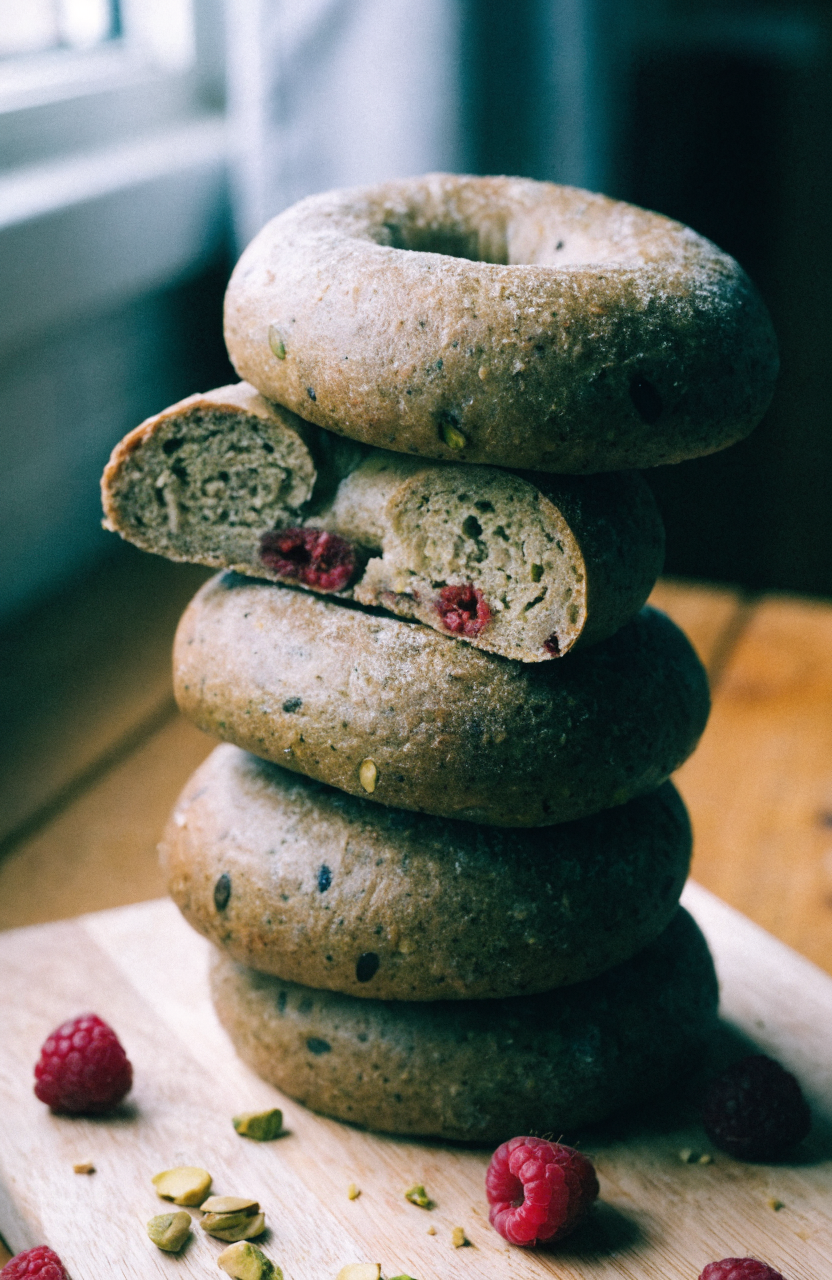
I first tried folding fresh raspberries into a bagel dough because I wanted a bright, slightly tart counterpoint to toasted pistachios — and that first batch fell apart in the boiling step. After a few adjustments to hydration, folding timing, and a short overnight chill, I landed on a method that reliably produces chewy, glossy sourdough bagels with intact pockets of fruit and even pistachio distribution. If you want to make homemade sourdough bagels with a fruity twist, this recipe shows exactly how to keep the dough manageable and the texture consistent.
Why this sourdough bagels works
The key technique is keeping the dough on the slightly firmer side for a fruit-studded bagel and introducing fragile ingredients late so they don’t turn into syrup during mixing. I use a fed, active sourdough starter and a dough hydration of about 58–60% for a proper chew without stickiness; that hydration balances the extra moisture from fresh raspberries. During testing I found that folding raspberries in before the bulk ferment created pockets of fermented fruit that weakened the gluten and caused bagels to flatten during boiling. The final method adds fruit and nuts after a short autolyse and partial development, then chills the shaped bagels briefly to firm them up before boiling. That combination yields a shiny crust, a dense but tender interior, and visible raspberries without a soggy center.
Key takeaways
- Keep dough slightly firmer (58–60% hydration) to support fruit and nuts.
- Add raspberries and pistachios late in the process to avoid weakening the gluten.
- Chill shaped bagels briefly before boiling to help them keep their shape.
- Use a malt or sugar boil for better crust color and sheen.
Ingredients you’ll need and what to substitute
This recipe uses a mature, active sourdough starter, high-protein bread flour for structure, fresh raspberries, and shelled pistachios. Bread flour (11–13% protein) is important because the fruit and nut inclusions reduce gluten strength; if you only have all-purpose flour, expect a softer, slightly less chewy crumb and reduce added water by 1–2 tablespoons. I recommend using fresh raspberries but if you must use frozen, thaw and drain most of the liquid and pat them dry — then toss them in a light dusting of flour to prevent bleeding. For pistachios, lightly toast them in a dry skillet for 3–4 minutes for more flavor, then cool and coarsely chop. If you want a slightly sweeter bagel, replace 1 tablespoon of the malt syrup with honey, but don’t exceed that or the crust may caramelize too quickly in the oven. Use fine sea salt for even seasoning; kosher salt is fine but measure by weight or use a slightly larger volume if using flaky salts.
Equipment
You don’t need anything exotic: a scale is very helpful for consistent bagels, a stand mixer with a dough hook speeds development but the dough can be mixed by hand, a rimmed baking sheet or parchment-lined baking stone for baking, and a wide pot for boiling. A slotted spatula or spider and a cooling rack are helpful for handling boiled bagels.
How to make sourdough bagels
Prepare the starter and dough
Feed your sourdough starter so it’s active and bubbly about 4–6 hours before you want to mix, or use a starter that has doubled and smells pleasantly tangy. In a large bowl mix the bread flour and water for a 20–30 minute autolyse; this hydrates flour and makes later gluten development easier. After autolyse, add the active starter, salt, and malt syrup (or sugar). Mix until a cohesive dough forms and then knead on medium speed in a stand mixer for about 5–7 minutes, or knead by hand for 8–10 minutes, until the dough is smooth and slightly springy and passes the windowpane test. The dough should feel tacky but not sticky.
Develop, rest, and incorporate inclusions
Let the dough rest for a short bulk ferment at room temperature for 60–90 minutes with a fold at 30 minutes; you want some rise but not full fermentation. After the first fold, gently flatten the dough and scatter the chopped pistachios and the raspberries (if using fresh, roll them gently in a tablespoon of flour first to reduce bleeding). Fold the dough over the inclusions without smashing the berries — the goal is to distribute the fruit and nuts while preserving raspberry shape. Continue the bulk ferment until the dough has puffed about 20–30% from its original volume, about another 30–45 minutes depending on starter activity and room temperature.
Shape, chill, and boil
Divide the dough into 8 equal pieces (about 120–140 grams each depending on desired size). Pre-shape into rounds and let them rest 10 minutes, then shape each into a bagel by rolling a rope and joining the ends or by poking a hole through the center of a round and stretching it to form a ring. Place shaped bagels on a parchment-lined tray and chill in the refrigerator for at least 4–12 hours; the chill firms the dough and makes shaping and boiling more reliable. When ready to bake, bring a wide pot of water to a gentle simmer and add 1–2 tablespoons of barley malt syrup or brown sugar — this sweetens the crust and encourages a shiny brown finish. Boil bagels 1 minute per side for a chewier crust and 30–45 seconds per side for a softer crust; avoid a rolling boil which can roughen the surface and displace raspberries.
Bake and finish
After boiling, drain bagels on a wire rack and, if desired, brush with an egg wash (1 beaten egg + 1 tablespoon water) for extra gloss. Sprinkle additional chopped pistachios or coarse sugar if you like. Bake on a preheated 475°F oven (use a baking stone or inverted rimmed sheet) for 12–16 minutes, rotating halfway through, until the crust is deep golden brown. Cool directly on a rack — cutting into them hot will smear the raspberry ribbons. Expect a chewy, slightly dense crumb with bright raspberry pockets and crunchy pistachio notes.
Things I learned the hard way
- If you add raspberries too early the bagels collapse in the boil — add them late after partial gluten development.
- Too much hydration makes shaping impossible with fruit; keep the dough firm (58–60% hydration) or reduce water slightly if your berries are extra juicy.
- Chilling shaped bagels for at least 4 hours helps keep the hole open during the boil; I failed when I skipped the chill and bagels became misshapen.
- Use a gentle simmer for boiling; an aggressive boil can tear the surface and release fruit into the water.
- Dust raspberries lightly with flour before folding in to limit bleeding and syrup formation during the bulk ferment.
- For even pistachio distribution, fold nuts in after the first set of folds rather than pressing them into individual rounds.
Variations to try
- Raspberry-Lemon: Add 1 tablespoon grated lemon zest to the dough and brush with a light lemon glaze after baking; no baking-time adjustment needed.
- Mixed Berry & Almond: Replace pistachios with slivered almonds and use a mix of raspberries and chopped strawberries; reduce added water by 1 tablespoon if using very juicy berries.
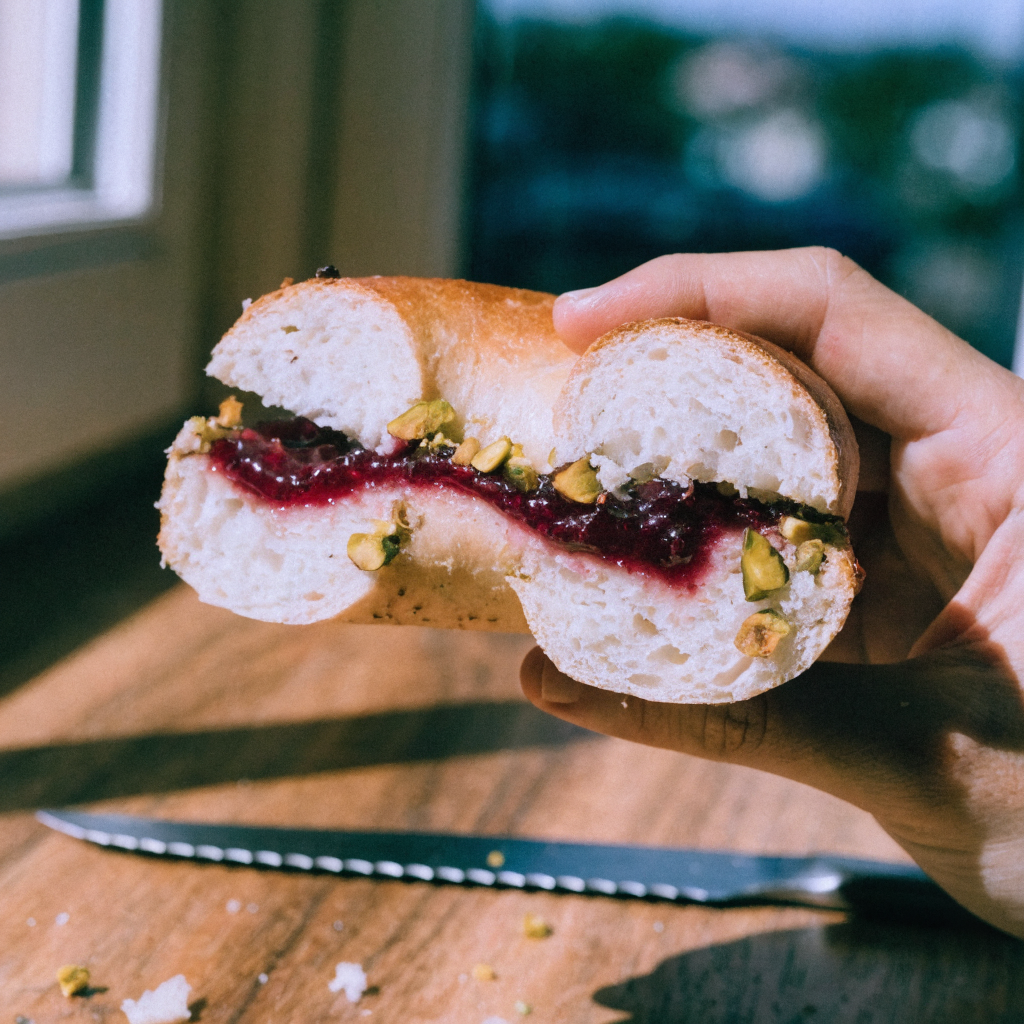
- Raspberry-Cream Cheese Filling: Split cooled bagels and spread cream cheese swirled with mashed raspberries; no cooking changes required.
- Seeded Top: After the egg wash, press sesame or poppy seeds into the tops instead of pistachios for a more classic bagel look; baking time remains the same.
Storage, freezing, and reheating
Store cooled bagels in a paper bag inside a loose plastic bag at room temperature for up to 2 days to keep the crust reasonably crisp. For longer storage, slice and freeze individually in a single layer on a tray, then transfer to a sealed freezer bag for up to 2 months; thaw at room temperature or toast directly from frozen. Reheat in a 350°F oven for 8–10 minutes for a refreshed crust, or slice and toast in a toaster for 2–3 minutes. Expect the crumb to firm up slightly after refrigeration; a quick reheat or toast restores chewiness best.
What to serve with sourdough bagels
These raspberry pistachio bagels are great with plain or whipped cream cheese, fresh ricotta and a drizzle of honey, or lemon curd for a bright pairing. For a savory-sweet contrast try smoked salmon with cream cheese and chives. For brunch, serve alongside a green salad, scrambled eggs, or a berry compote. They also make a lovely afternoon snack with a cup of tea or a latte.
Raspberry Pistachio Sourdough Bagels
Ingredients
Equipment
Method
- Feed your sourdough starter so it’s active and bubbly 4–6 hours before mixing or use a starter that has doubled; in a large bowl combine the bread flour and 150 grams of the water and mix until no dry flour remains; let rest 20–30 minutes for autolyse.
- Add the active starter, remaining water if needed, and malt syrup to the autolysed flour, then mix until a shaggy dough forms; add the salt and knead in a stand mixer on medium for 5–7 minutes or by hand for 8–10 minutes until the dough is smooth and slightly elastic (tacky but not sticky).
- Let the dough rest for 30 minutes then perform a gentle stretch-and-fold; after that initial fold, scatter the toasted pistachios and lightly floured raspberries over the dough and fold gently to incorporate without crushing the berries; continue the bulk ferment at room temperature until the dough has puffed about 20–30% (about 60–90 minutes total), performing one more fold if needed.
- Turn the dough out, divide into 8 even pieces (about 120–140 g each), pre-shape into rounds and rest 10 minutes, then shape into bagel rings by rolling into ropes and joining ends or poking a hole through each round and stretching to form a ring.
- Place shaped bagels on a parchment-lined tray and chill in the refrigerator for at least 4 hours and up to 12 hours to firm the dough and improve shape retention.
- Preheat oven to 475°F with a baking stone or inverted sheet inside; bring a wide pot of water to a gentle simmer and stir in 1–2 tablespoons barley malt syrup or brown sugar; boil bagels 1 minute per side for chewier crust (30–45 seconds each side if you prefer softer crust), using a slotted spatula to turn gently; drain briefly on a rack, brush with egg wash if desired, sprinkle extra chopped pistachios, then bake for 12–16 minutes rotating halfway through until deep golden brown.
- Cool bagels on a wire rack for at least 20 minutes before slicing to allow the crumb to set; store as directed.
Notes
Frequently asked questions
Can I use frozen raspberries? Yes, but thaw and drain them well, pat dry, and toss lightly in flour before adding to the dough to prevent too much extra moisture and color bleed.
Do I have to chill the shaped bagels? Chilling is recommended; it firms the dough, reduces spread during boiling, and helps the hole stay open. If you’re short on time, chill at least 1 hour, but results are best with 4–12 hours.
What if my bagels are too dense? Density usually means underproofing or insufficient gluten development. Allow the dough to show a noticeable but not complete rise during bulk ferment, and ensure you knead until smooth and slightly elastic.
How do I keep raspberries from turning into jam? Keep berries chilled and add them late, dusted in flour; avoid high hydration and aggressive fermentation times that break the fruit down into syrup.
Can I use instant yeast to speed this up? You can add a small pinch of instant yeast (1/8 to 1/4 teaspoon) to speed proofing, but that changes the pure sourdough timeline and flavor. The bagels will still work but taste less tangy.
How long will these bagels keep in the freezer? Properly wrapped, they keep well for up to 2 months. Thaw on the counter or toast directly from frozen for best texture.
Closing
Making sourdough bagels with raspberries and pistachios takes a little patience, but the payoff is a chewy, glossy bagel with bright fruit ribbons and nutty crunch — a version I now prefer for weekend brunch. Keep the hydration conservative, fold inclusions late, and chill shaped bagels before boiling for the most reliable results.

Leave a Reply