I still remember the first time I tried turning a summer zucchini bounty into a sheet cake—the batter looked promising, but the center stayed oddly dense. After a few rounds of tweaking I landed on a reliable approach: a boxed yellow cake mix for structure, freshly shredded and well-drained zucchini for moisture without collapse, and a lightly stabilized cinnamon cream cheese frosting so it spreads smoothly without weeping. This zucchini cake hits the sweet spot between easy and homey, with clear texture cues so you get consistent results.
Why this zucchini cake works
The trick with a moist vegetable-forward cake is balancing moisture and structure. Using a yellow cake mix as the backbone gives the batter predictable leavening and crumb, while freshly shredded zucchini folded in at the end adds moisture and flecks of green without changing the flavor. During testing I learned that squeezing the zucchini too dry produced a drier cake; not squeezing it at all made the center gummy. The solution that worked best was a moderate squeeze and a short resting step so excess liquid redistributes. For the frosting, adding a small amount of powdered sugar and a touch of cornstarch stabilizes the cream cheese, preventing it from separating or becoming runny on a warm day.
Key takeaways
- Use boxed yellow cake mix for structure and reliable rise.
- Shred zucchini finely and squeeze, but keep some moisture for tenderness.
- Stabilize cream cheese frosting slightly so it spreads cleanly and doesn’t weep.
Ingredients you’ll need and what to substitute
This recipe keeps shopping simple: a 15.25-ounce yellow cake mix, eggs, neutral oil, and shredded zucchini form the cake; cream cheese, butter, powdered sugar, and cinnamon make the frosting. I use neutral vegetable oil for an even crumb; melted butter will give a richer flavor but may make the batter slightly heavier. If you prefer less sugar, reduce the powdered sugar in the frosting by 1/4 cup—expect a softer, tangier frosting. For the zucchini, pick medium or small squash for tender texture; large squash can be watery or mealy. If you must use frozen grated zucchini, thaw completely and squeeze out as much water as possible—plan for a slightly longer bake time.
Equipment
Keep equipment minimal and familiar. A 9×13-inch pan gives a reliably sized sheet cake; a standard box grater or food processor with the shredding disk speeds prep. I like a large rimmed sheet pan if you want a thinner cake, but adjust baking time accordingly. A hand mixer is helpful for a lump-free frosting, though a whisk will work with more elbow grease.
How to make zucchini cake
Prep and shred
Preheat your oven to 350°F and grease a 9×13-inch baking pan, then line it with parchment if you like easier removal. Trim both ends off 2 medium zucchini and shred on the large holes of a box grater or in a food processor. Place the shreds in a clean kitchen towel or several layers of paper towel and press gently to remove some surface moisture—you’re aiming for damp shreds, not bone-dry. Let them sit while you mix the batter so remaining moisture evens out.
Mix the batter
In a large bowl whisk together the contents of the 15.25-ounce yellow cake mix, 3 large eggs, 1/3 cup neutral oil, 1 cup plain Greek yogurt (or sour cream), and 1 teaspoon vanilla extract until smooth. The Greek yogurt adds tenderness and a bit of tang; if you only have sour cream, use that. Fold in the shredded zucchini with a rubber spatula until evenly distributed. The batter should be thick but pourable. If it looks excessively watery, let it sit 5 minutes so the dry mix absorbs extra liquid; if it still seems too loose, add 1 to 2 tablespoons of cake mix or all-purpose flour and fold gently.
Bake and test
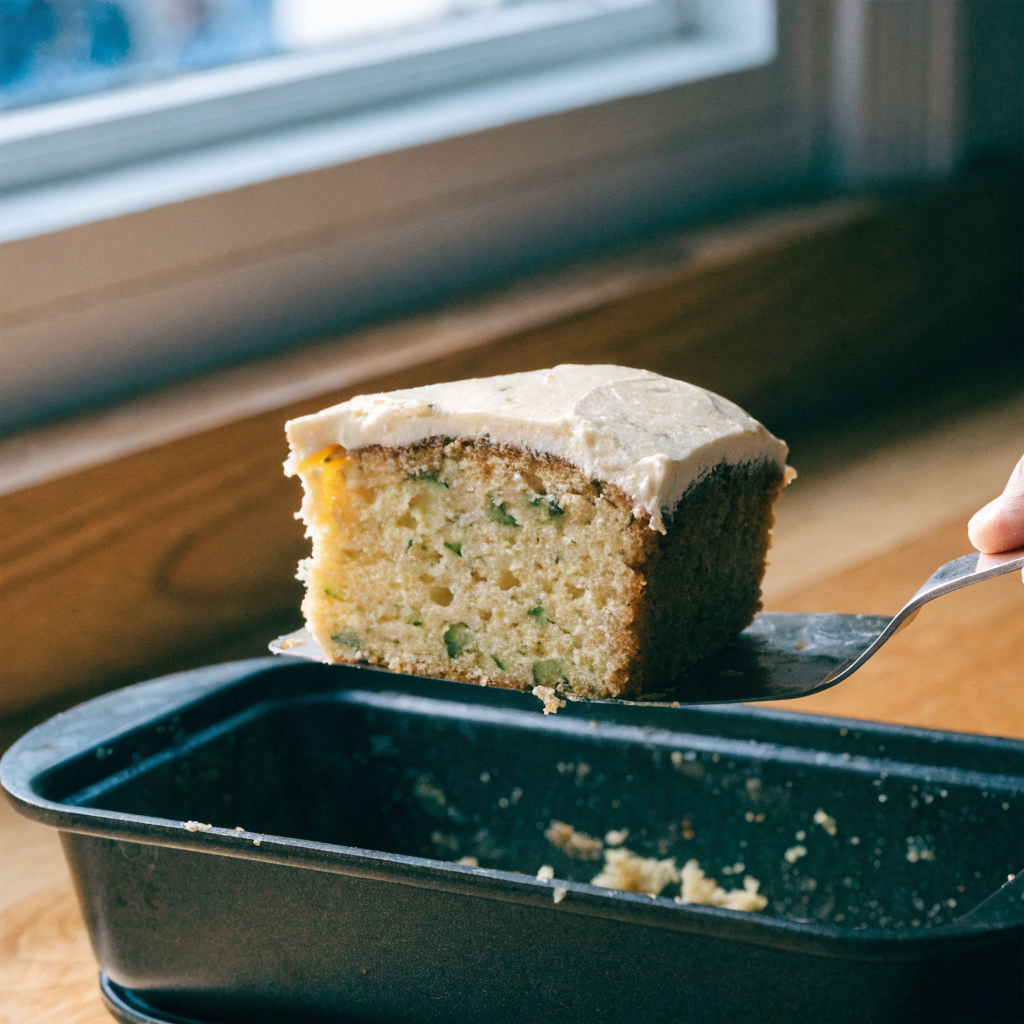
Pour the batter into the prepared 9×13 pan and smooth the top. Bake at 350°F for 28–34 minutes; start checking at 25 minutes. The cake is done when the edges pull slightly from the pan, the top is lightly golden, and a toothpick inserted into the center comes out with just a few moist crumbs (not wet batter). I found that rotating the pan once halfway through ensures even browning in older ovens. Cool the cake in the pan on a wire rack for 20–30 minutes before frosting so the frosting doesn’t melt on a hot surface.
Make the cinnamon cream cheese frosting
While the cake cools, beat 8 ounces (1 package) softened cream cheese with 4 tablespoons (1/4 cup) unsalted butter at room temperature until smooth. Add 1 teaspoon ground cinnamon, 1 teaspoon vanilla extract, and 2 to 2 1/2 cups powdered sugar, adding gradually until you reach a spreadable consistency. For a slightly firmer frosting that holds swirls, stir in 1 teaspoon cornstarch. Taste and add salt if the frosting seems overly sweet—about a pinch helps balance it. Chill the frosting 10–15 minutes if your kitchen is warm before spreading.
Assemble
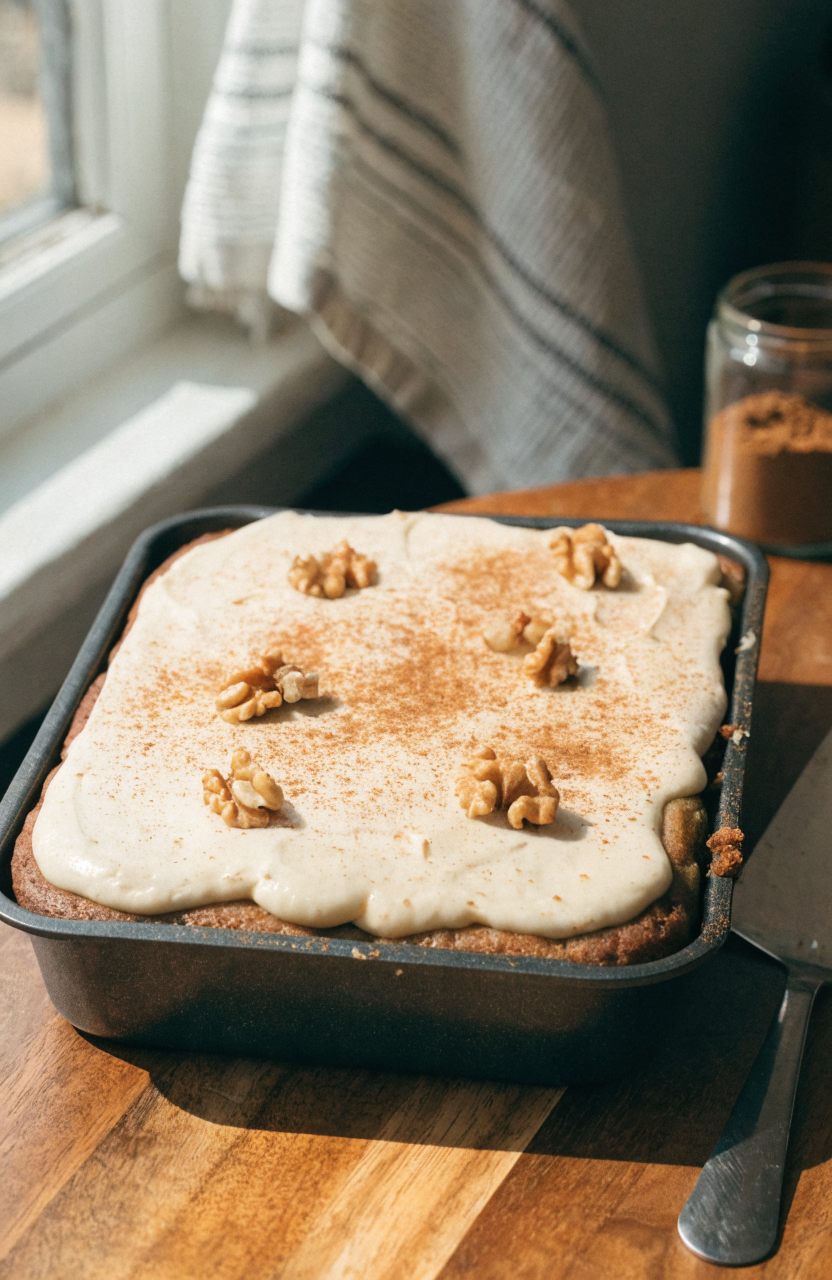
Once the cake is mostly cool (around 30–40 minutes in the pan), spread the frosting evenly with an offset spatula. If you prefer a thinner glaze, use 1 1/2 cups powdered sugar and thin with 1 to 2 tablespoons milk. Garnish with a light dusting of cinnamon or a few toasted chopped walnuts if desired. For clean slices, chill the frosted cake for 15–20 minutes, then slice with a sharp knife wiped between cuts.
Things I learned the hard way
- Don’t over-squeeze the zucchini: my first attempt produced a dry cake after I wrung it completely; leaving a bit of moisture keeps the crumb tender.
- Stabilize the frosting lightly: skipping the cornstarch led to a frosting that wept on a warm day, especially after refrigeration.
- Use yogurt or sour cream: swapping plain yogurt for all the oil gave a softer crumb and prevented collapse in the center.
- Check doneness with visual cues: especially with vegetable cakes, a toothpick with a few moist crumbs is the best indicator—avoid baking until completely dry.
- Cool slightly before frosting: frosting a hot cake melts the cream cheese and makes it runny; I let the cake cool 20–30 minutes in the pan first.
Variations to try
Spiced walnut: Fold 1/2 cup toasted chopped walnuts into the batter and sprinkle more on top of the frosted cake—no temperature change needed, but watch that added mix-ins don’t sink by folding gently.
Lemon-scented: Add 1 tablespoon lemon zest to the batter and swap vanilla in the frosting for 1/2 teaspoon lemon extract; bake the same time but expect a brighter flavor and slightly firmer frosting if you reduce sugar.
Mini loaf version: Divide batter into four 8×4-inch loaf pans and bake at 350°F for 28–35 minutes, checking earlier; cooling time will be similar but monitor doneness with a toothpick.
Storage, freezing, and reheating
Refrigerate leftover frosted zucchini cake in an airtight container for up to 4 days—the frosting will firm up in the fridge; bring to room temperature 20–30 minutes before serving for softer texture. Unfrosted cake (cooled completely) freezes well: wrap tightly in plastic and foil and freeze for up to 3 months. Thaw overnight in the refrigerator, then bring to room temperature before frosting. If you freeze already-frosted slices, expect the frosting texture to be a bit grainier after thawing; a quick whip with a fork after thawing can refresh it slightly.
What to serve with zucchini cake
This cake works well with simple pairings: a scoop of vanilla ice cream, a dollop of lightly sweetened whipped cream, or a cup of black coffee or chai for brunch. For a seasonal board, serve alongside fresh berries or a citrus compote to cut the richness.
Moist Zucchini Cake with Cinnamon Cream Cheese Frosting
Ingredients
Equipment
Method
- Preheat the oven to 350°F and grease a 9×13-inch pan; line with parchment if desired. Shred zucchini on the large holes of a box grater and place in a clean towel; press gently to remove only obvious excess water until you have 2 cups packed shredded zucchini.
- In a large bowl whisk together flour, baking powder, baking soda, cinnamon, salt, and nutmeg. In another bowl whisk granulated sugar and brown sugar with eggs, then add oil, yogurt, and vanilla and whisk until smooth. Pour wet into dry and stir until just combined, then fold in shredded zucchini and optional nuts.
- Spread batter into the prepared pan and smooth the top. Bake at 350°F for 32–38 minutes for a 9×13 pan (or 24–30 minutes for two 9-inch rounds) until a toothpick shows moist crumbs and the top springs back lightly. Cool in the pan 20 minutes, then invert onto a rack to cool completely.
- Beat softened cream cheese and butter together until smooth. Add powdered sugar gradually, then cinnamon and vanilla; beat until combined and smooth. If frosting is too soft, chill 10 minutes or add up to 1 tablespoon extra powdered sugar to firm to spreadable consistency.
- If using a 9×13 pan, spread frosting evenly over completely cooled cake. If using rounds, level the cakes if needed, spread frosting between layers and over top, and chill briefly to set before slicing.
Notes
Frequently asked questions
Can I use frozen shredded zucchini? Yes—thaw fully and squeeze out as much water as possible; expect a slightly longer bake time and possibly a denser crumb because frozen zucchini loses cell structure.
Why is my zucchini cake gummy in the center? That usually means too much free liquid in the batter or underbaking; squeeze the zucchini but leave a little moisture, and bake until a toothpick shows moist crumbs rather than raw batter.
Can I make the cake ahead? You can bake the cake a day ahead, wrap it tightly, and refrigerate unfrosted; frost the next day for best texture. Frosted cake keeps up to 4 days refrigerated.
How do I prevent the frosting from weeping? Slightly stabilizing the frosting with cornstarch or chilling it briefly before spreading helps; also avoid frosting a hot cake and keep the finished cake refrigerated if your kitchen is warm.
Can I halve the recipe for an 8-inch pan? Yes—halve the ingredients and bake in an 8-inch round at 350°F for about 28–36 minutes, checking doneness with a toothpick.
Closing
This zucchini cake delivers a tender, moist crumb with a cinnamon cream cheese frosting that behaves—it’s the result of small but practical tweaks I made after a few early attempts, and the texture cues in the recipe should keep your results consistent. I like keeping a pan in the fridge for a few hours so the frosting sets nicely before slicing; it makes clean pieces for sharing or a simple dessert plate.



Leave a Reply